
Research
Clinical research is ever-growing, with over 11,000 studies published on light therapy or photobiomodulation for various conditions.
Clinical research is ever-growing, with over 11,000 studies published on light therapy or photobiomodulation for various conditions.
Looks like you haven’t added anything yet, let’s get you started!
Continue shopping
100% of profits go back into the clinical research and product development working toward medical approval. Every Neuronic device sold helps move that work forward.
3
Completed Studies
13
Ongoing Studies
17
Planned Studies
210+
Research Participants





 Published
This study evaluated the effects of tPBM on cognitive performance, specifically in tasks involving vigilance and working memory. The research compared active tPBM with sham stimulation during cognitive tasks and observed neurophysiological effects, including changes in processing speed and stress measures. While preliminary due to a small sample, results are interpreted as supporting further exploration of tPBM’s role in augmenting cognition.
 Published
Recurrent depression and anxiety can be resistant to monotherapies, including psychotherapy, eye movement desensitization and reprocessing (EMDR), and selective serotonin reuptake inhibitors (SSRIs). Over a 12-week tPBM protocol, participants reported improvements in sleep quality, irritability, and depression scores, though anxiety outcomes varied across measures. These preliminary findings suggest that tPBM may offer supportive benefits alongside conventional treatments.
 Published
This study looked at the effects of photobiomodulation (PBM) therapy on long COVID symptoms like chronic fatigue and brain fog. It tested two devices: a helmet (tPBM) and a whole body light bed. Cognitive tests and brain activity measured before and after the therapy showed significant improvements. The findings suggest that PBM intervention, whether for the brain or body, may help treat brain fog in Long COVID patients.
 Case Study
This case study examines tPBM in Patient M, who has complex multisystem illness, including Postural Orthostatic Tachycardia Syndrome (POTS), Ehlers-Danlos syndrome (EDS) and seizure-like episodes. The report documents progressive improvements in energy, sleep, cognitive function, exercise tolerance, and functional independence following individualized tPBM protocols.
 Case Study
Client I.T. was a typical 40-year-old mother and pharmaceutical sales rep living in Vancouver when her life changed dramatically after a car accident in 2019. What seemed like a mild concussion turned into years of navigating brain fog, anxiety, sensory overload, and fatigue.
 Case Study
This case study used a photobiomodulation (PBM) protocol with the Neuradiant 1070 device on a healthy individual, set at 70 Hz for 12 minutes at 75% intensity. Brain activity was then recorded with the NeuroCatch® Platform, which measures amplitude (brain activity strength) and latency (response speed).
 White Paper
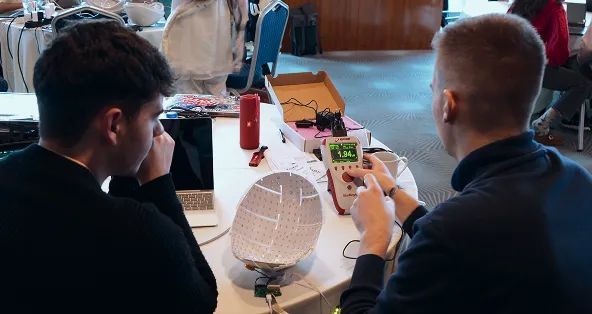
At Neuronic we have a commitment to being leaders in the field by ensuring our data, devices, and reporting meet the industry’s highest standards of transparency. The following article shares our approach to accurate measurement, the importance of each key metric (total power, irradiance, and peak wavelength), and why clarity matters more than ever.
Note: The studies listed here represent a subset of our ongoing research. Additional studies may not be displayed due to active data collection, publication timelines, or confidentiality requirements
 In Progress
Investigating the Individual and Combined Effects of Photobiomodulation (PBM) and Virtual Reality (VR) Interventions on ADHD Symptoms.
 In Progress
The EVANTHEA Trial is a randomized, controlled study aimed at evaluating the effectiveness of precision medicine in treating early dementia and mild cognitive impairment (MCI).
 In Progress
This pilot double-blinded, randomized, placebo-controlled trial compares the effects of pulsed and continuous transcranial photobiomodulation (tPBM) to a placebo in individuals with chronic fatigue. The study aims to assess the efficacy of different tPBM protocols in managing chronic fatigue.
 In Progress
This pilot double-blinded, randomized, placebo-controlled trial compares the effects of pulsed and continuous transcranial photobiomodulation (tPBM) to a placebo in individuals with chronic fatigue. The study aims to assess the efficacy of different tPBM protocols in managing chronic fatigue.
 In Progress
A study to evaluate the effects of Deep Transcranial Magnetic Stimulation (TMS) and Photobiomodulation (PBM) on behavioral, cognitive, and neurophysiological measures. Participant groups: (1) individuals with Major Depressive Disorder and (2) individuals with late-onset Alzheimer's Disease.
 In Progress
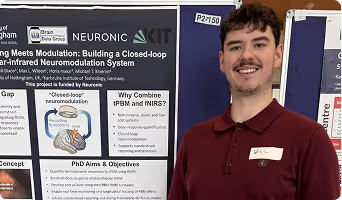
Neuronic is partnering with the University of Nottingham to study tPBM's effects on brain hemodynamics using neuroimaging. Learn about the research.
 In Progress
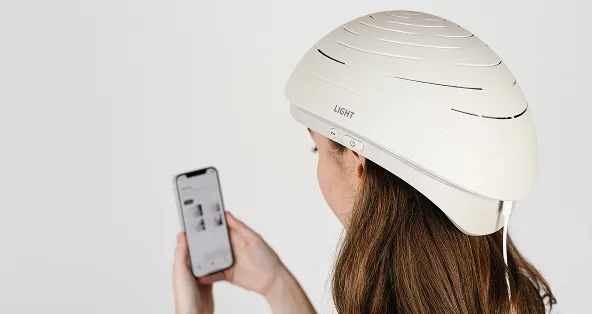
At Neuronic, we are conducting internal research to strengthen the scientific foundation of our photobiomodulation (PBM) device and contribute to the growing body of literature on this promising modality. Our work integrates anonymised user data with the scientifically validated PROMIS-10, a standardised tool developed by the NIH to assess global physical and mental health.
 In Progress
In this clinical trial, we will be evaluating various tPBM protocols utilizing the Neuradiant 1070 device as an intervention for mild cognitive impairment and early-stage dementia due to Alzheimer’s disease.
Applications
| Research | Mechanism |
|---|---|
 AnxietyStress regulation | Neurotransmitter Balance1Prefrontal cortex & hippocampus |
 Alzheimer's & DementiaCognitive decline | Amyloid-β Clearance2Microglial activation & glymphatic flow |
 Autism (ASD)Neurodevelopmental support | Mitochondrial Dysfunction3Increased ATP generation |
 Traumatic Brain InjuryPost-impact recovery | Reduces Inflammation4Supports healing after injury |
 ParkinsonsMotor & dopaminergic decline | Reduces Cell Death and Damage 5Inhibition of apoptosis and neuroprotective factors |
 Brain FogMental sluggishness | Cellular Energy Restoration6Faster reaction time & working memory |
 PTSDFear & stress response | Prefrontal Cellular Modulation7Suppresses c-fos in cingulate/infralimbic cortex |
 DepressionMood support | Serotonin ↑1Regulation of hormones attributed to depression |
 Insomnia & SleepSleep quality | Glymphatic Clearance8Lymphatic vessel relaxation via NO |
 ADHDAttention & focus | Supporting Underpowered Brain Regions9Working memory & sustained attention |
Neuronic devices are not intended for the diagnosis or prevention of any medical condition. Neuronic does not provide medical advice. Neuronic products are designed to support wellness and should not replace professional medical guidance. Always consult a qualified healthcare professional for your health or any specific medical concerns.