What Are Brain Waves? 5 Types of Brain Waves and Their Functions
![[object Object]](https://cdn.sanity.io/images/h29o7kl4/staging/0c0476690b5e49f9a375deb663c4d52aa39fa8e2-352x351.heif?w=352&q=80&auto=format&fit=max)
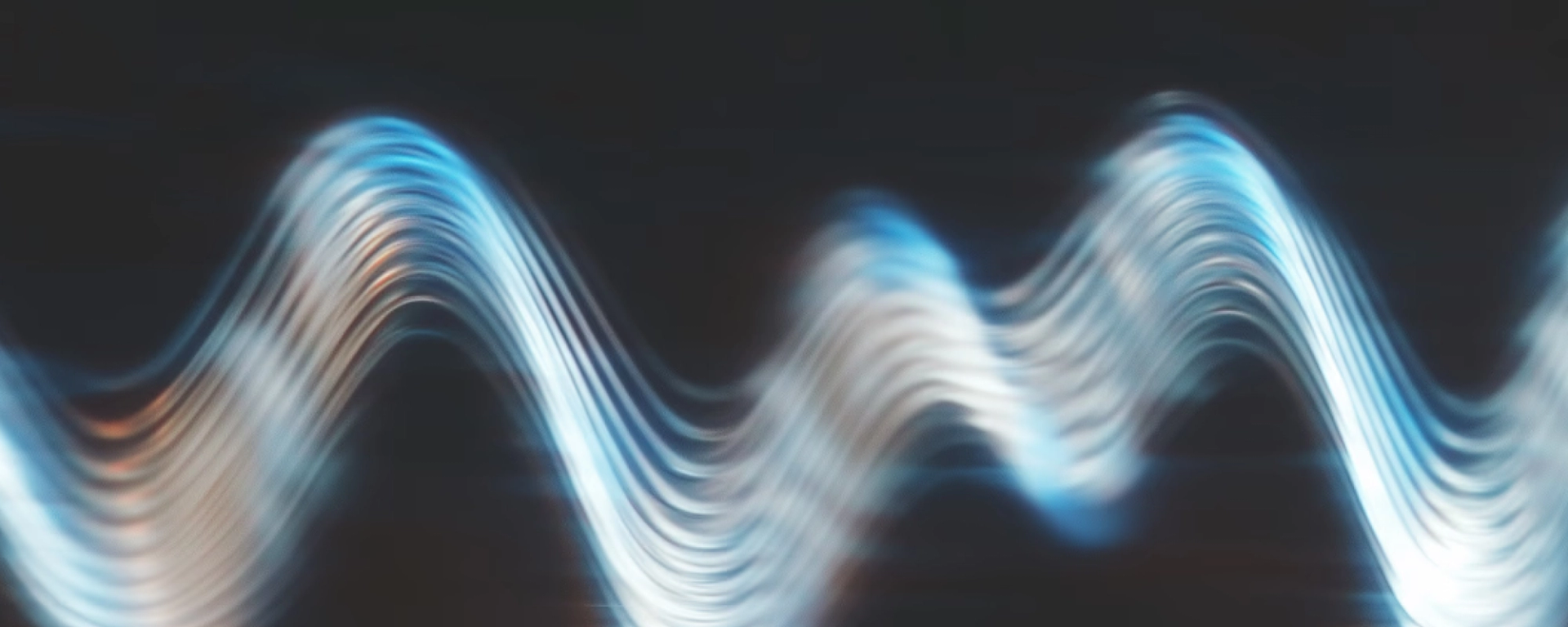
Ever wondered what happens in your brain when you’re focused, relaxed, or even dreaming? Our minds are in constant flux, operating on different frequencies known as brainwaves. These unique electrical patterns - delta, theta, alpha, beta, and gamma - play a crucial role in shaping our thoughts, emotions, and overall well-being. Unlocking the secrets of these brainwaves can significantly impact your daily life, from enhancing creativity and problem-solving skills to managing stress and improving sleep quality.
Understanding Brain Wave Frequencies: What Are Brain Waves?
How Brain Waves Are Generated in the Brain
To understand the impact brainwaves have on our lives, we need to understand what they are and how they function. Brain waves are measured using an electroencephalogram (EEG), a non-invasive technique that records electrical activity from the scalp. Brain waves are never the result of one neuron’s activity, but rather a symphony of neurons firing and giving rise to the brain waves we see on an EEG) (Collura, 2014).
What we see on an EEG is the result of specialized neurons called pyramidal cells that reside on the upper layer of the cortex. These signals are measured in cycles per second, or hertz (Hz), and can reveal a lot about our mental state and cognitive functioning.
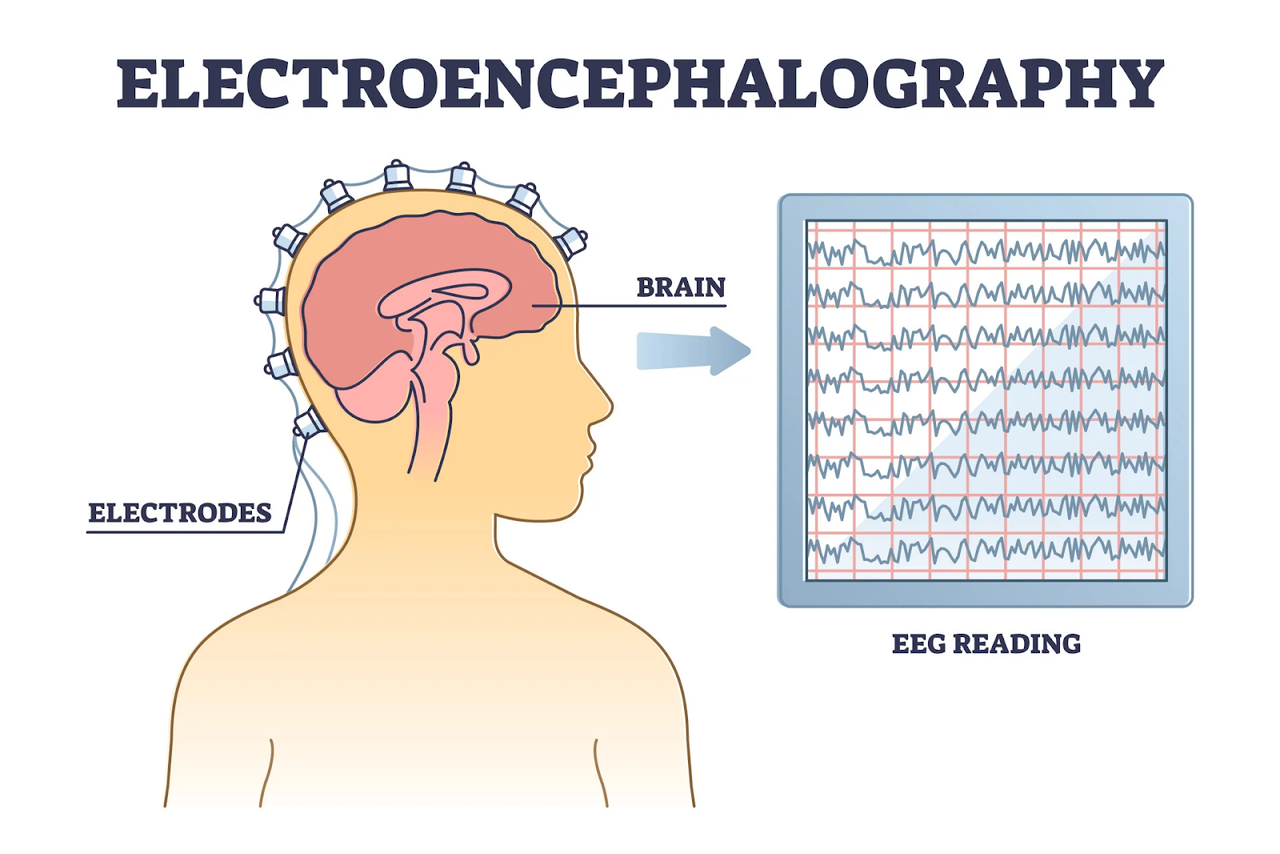
Photo from simplepsychology.org
Brain Wave Frequency Ranges and What They Mean
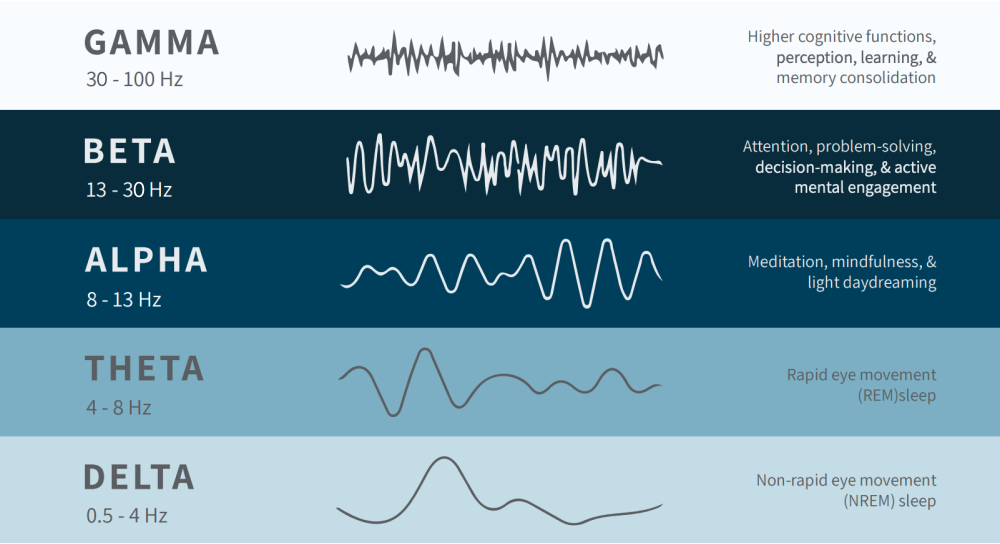
Brainwaves are categorized into five main types based on their frequency ranges:
- Delta (0.5-4 Hz)
- Theta (4-8 Hz)
- Alpha (8-12 Hz)
- Beta (12-30 Hz)
- Gamma (30+ Hz)
Each of these brainwave types operates at different frequencies and is associated with distinct states of consciousness and mental activities. From the slowest delta waves to the fastest gamma waves, each type plays a crucial role in our daily lives by influencing our thoughts, emotions, and behaviors.
How and When Were Brainwaves Discovered?
Hans Berger and the First EEG Recordings
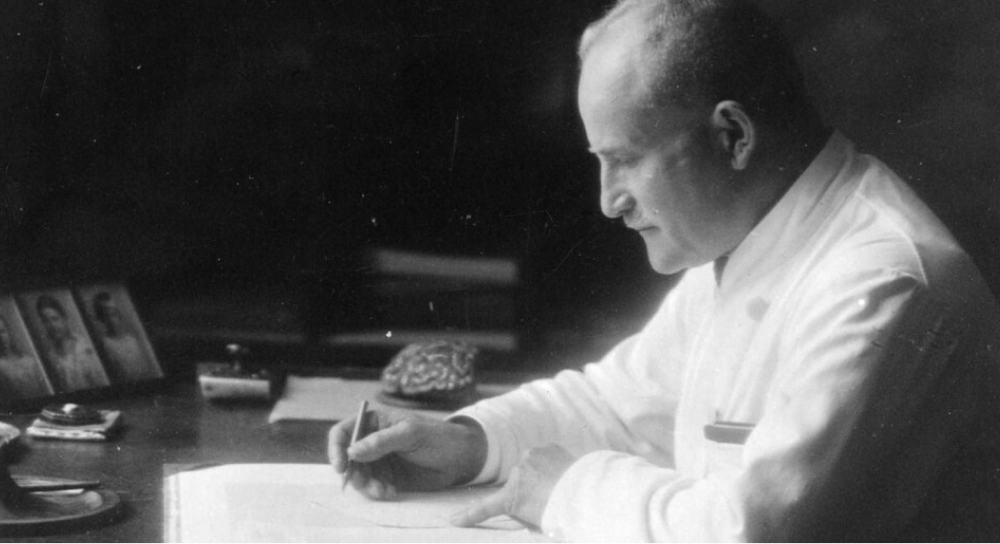
The first person to record electrical activity in the brain was by German psychiatrist Dr. Hans Berger, in 1924 (Collura, 2014). Through the use of an EEG, Berger not only recorded brain wave activity, but also noticed a 10-cycle-per-second rhythm, which he coined “alpha” and a 20-cycle-per-second rhythm, calling it “beta.”
The Discovery of Delta and Theta Waves
Inspired by Berger’s work with the EEG, W. Gray Walter, a young English physiologist, decided to place electrodes on the skull of a patient undergoing neurosurgery (Marcuse, Fields & Yoo, 2015). Walter noticed this patient exhibited slow wave activity, which he called “delta” waves. Slow rhythmic oscillations were discovered by Jung and Kornmüller in 1938, which later became known as “theta” waves in 1960 by Green and colleagues (Burke & Maurer, 2021).
Lastly, the origin of our fastest brain wave - gamma - largely remains a mystery, with no one person linked to its discovery.
The 5 Types of Brainwaves
The human brain is a complex organ with a multitude of functions, and brainwaves are a testament to this complexity. Each type of brainwave serves a different purpose and is predominant during various states of consciousness. The five main types of brainwaves each have a unique frequency range and associated mental state.
Delta Waves: The Sleep State
When Delta Waves Occur
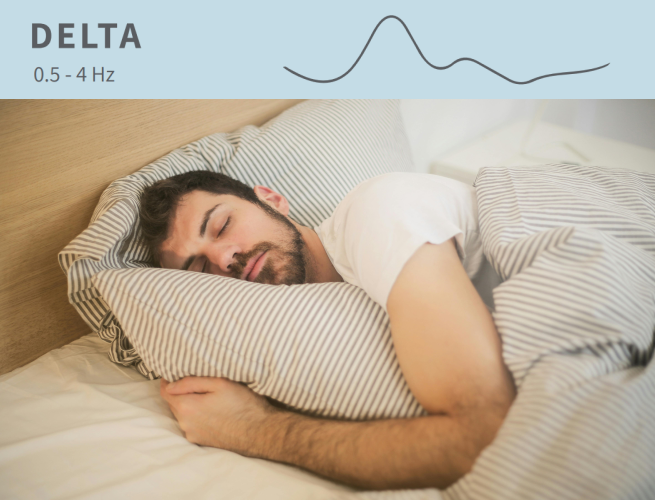
Delta waves, with a frequency range of 0.5 to 4 Hz, are the slowest of the brainwaves and are primarily associated with deep, restorative sleep (Frohlich, Toker & Monti, 2021).
Beyond sleep, delta waves are also prominent during a coma, anesthesia, and generalized epileptic seizures. During deep sleep, also known as stage IV or rapid eye movement sleep, delta waves are predominant and dreaming typically occurs during this stage of sleep (National Institute of Health, 2022).
What Delta Waves Do for the Brain and Body
During delta wave sleep, also known as slow-wave sleep, the body's metabolic rate slows down, and the production of growth hormones increases (Besedovsky et al., 2022). This state of deep sleep is essential for repairing muscles, strengthening the immune system, and regulating various bodily functions. A lack of delta wave sleep can lead to a weakened immune system, increased stress levels, and cognitive impairments (Irwin, 2016).
Interestingly, delta waves are not only present during sleep but can also be observed during deep meditation or states of unconsciousness. Practices such as yoga nidra, a form of guided meditation, can help induce delta wave activity while awake, promoting deep relaxation and healing (Datta et al., 2022). By understanding the importance of delta waves and finding ways to enhance them, we can improve our overall health and well-being.
Theta Waves: Creativity and Intuition
When Theta Waves Occur
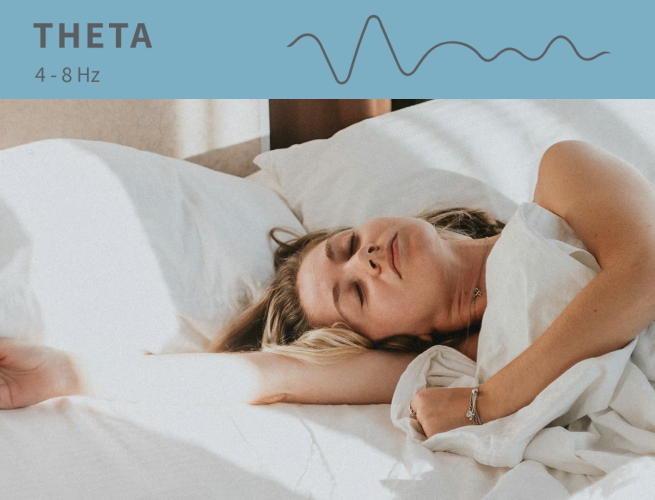
Theta waves, ranging from 4 to 8 Hz, are often associated with creativity, intuition, and deep relaxation.
These brainwaves are typically present during light sleep, REM (rapid eye movement) sleep, and deep meditative states. Theta waves are known for their role in enhancing creativity and problem-solving skills, making them highly valuable for artists, writers, and anyone seeking innovative solutions.
Creativity, Intuition, and the Subconscious
When the brain is in the theta state, we experience a heightened sense of intuition and insight. This state allows us to access the subconscious mind, where our deepest memories, emotions, and creative ideas reside. Theta waves facilitate the integration of conscious and subconscious thoughts, leading to moments of inspiration and "aha" moments. This is why many people report having their best ideas just before falling asleep or during meditation.
Emotional Processing and Stress Reduction
Theta waves also play a significant role in emotional healing and stress reduction. Practices such as mindfulness meditation, yoga, and deep breathing exercises can help increase theta wave activity, promoting a sense of calm and inner peace. By tapping into the theta state, we can enhance our creativity, intuition, and emotional well-being, leading to a more fulfilling and balanced life.
Alpha Waves: Relaxation and Calmness
When Alpha Waves Occur
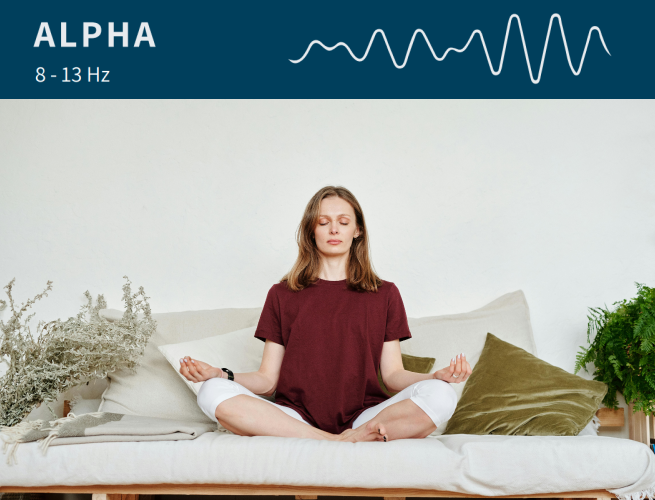
Alpha waves, with a frequency range of 8 to 12 Hz, are associated with a state of relaxed alertness and calmness.
These brainwaves are predominant when we are awake but in a relaxed state, such as during daydreaming, light meditation, or simply sitting quietly with our eyes closed. Alpha waves bridge the gap between our conscious and subconscious minds, promoting a sense of tranquility and mental clarity.
Stress Reduction and Mental Clarity
When the brain is in the alpha state, we experience a reduction in stress and anxiety levels. This state allows us to unwind and recharge, making it easier to handle the challenges of daily life. Alpha waves are also linked to improved learning and memory, as they facilitate the processing and assimilation of new information. This is why taking short breaks to relax and clear the mind can enhance productivity and cognitive performance.
How to Support Alpha Waves
There are various techniques to increase alpha wave activity, such as practicing mindfulness meditation, engaging in deep breathing exercises, or listening to calming music. By incorporating these practices into our daily routine, we can cultivate a more relaxed and focused mind. Understanding and harnessing the power of alpha waves can lead to a more balanced and stress-free life.
Beta Waves: Alertness and Focus
When Beta Waves Occur
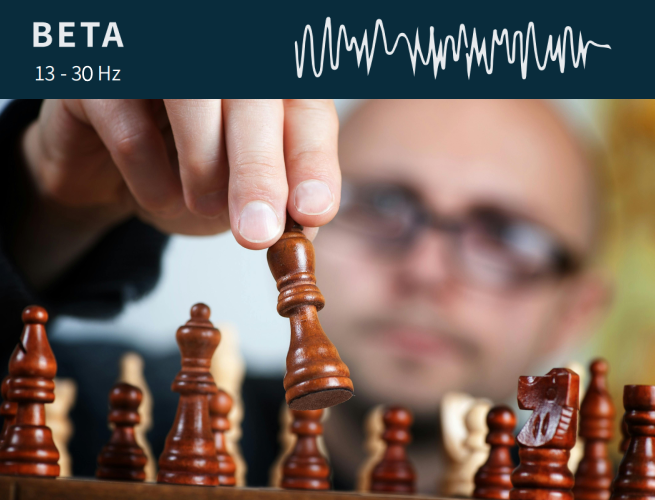
Beta waves, ranging from 12 to 30 Hz, are the brainwaves of active thinking, problem-solving, and focus (Zhang & Jacobs, 2015). These waves are predominant when we are awake, alert, and engaged in tasks that require concentration and cognitive effort. Beta waves are essential for processing information, making decisions, and performing complex mental activities.
Productivity vs. Overstimulation
When the brain is in the beta state, we experience heightened alertness and mental clarity. This state is crucial for tasks that require attention to detail, critical thinking, and quick decision-making. However, prolonged periods of beta wave activity are related to increased stress and anxiety levels, as the brain remains in a constant state of high alert (Attar, 2022). It is essential to balance beta wave activity with periods of relaxation to avoid mental fatigue and burnout.
Balancing Beta Activity
Techniques such as mindfulness meditation, deep breathing exercises, and regular breaks can help regulate beta wave activity and maintain optimal mental performance (Duda, Clarke & Barry, 2025). By understanding the role of beta waves and finding ways to manage them, we can enhance our focus, productivity, and overall mental well-being.
Gamma Waves: Higher Mental Activity
When Gamma Waves Occur
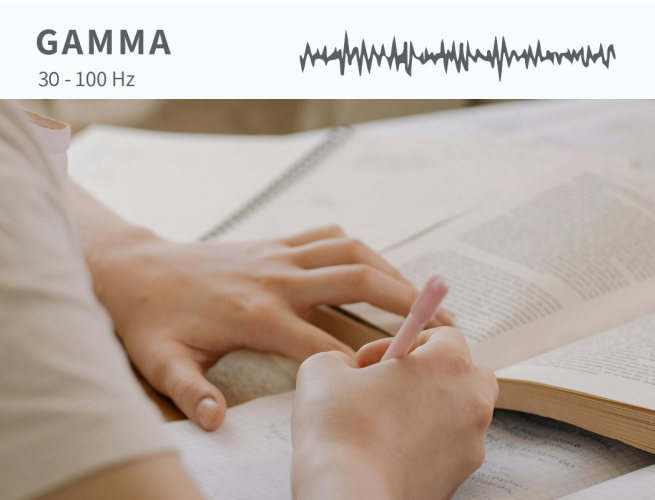
Gamma waves, with a frequency range of 30 to 100 Hz, are the fastest of the brainwaves and are associated with higher mental activities such as perception, consciousness, and complex problem-solving (Hughes, 2008).
These waves are believed to play a crucial role in cognitive functioning, information processing, and the integration of sensory input. Gamma waves are often linked to peak mental performance and heightened states of awareness.
Flow States and Cognitive Clarity
When the brain is in the gamma state, we experience a sense of clarity, insight, and heightened perception. This state allows us to make connections between different pieces of information, leading to moments of profound understanding and wisdom. Gamma waves are also associated with the experience of "flow," a state of complete immersion and focus in an activity, where time seems to disappear, and performance is at its peak.
Supporting Gamma Activity
Practices such as visualization and cognitive training can help increase gamma wave activity, promoting higher mental functioning and overall cognitive health (Lutz et al., 2004). By tapping into the gamma state, we can enhance our mental performance, creativity, and problem-solving abilities, leading to a more fulfilling and successful life.
The Impact of Brainwaves on Daily Life
How Brain Waves Influence Mood, Focus and Sleep
The different types of brainwaves and their associated states have a profound impact on our daily lives. Understanding how these brainwaves influence our thoughts, emotions, and behaviors can help us optimize our mental and emotional well-being. By learning how to tap into and regulate these brainwave states, we can enhance our focus, creativity, relaxation, and overall mental health.
For instance, increasing delta wave activity can improve sleep quality and promote physical healing, while enhancing theta wave activity can boost creativity and intuition. Alpha waves can help reduce stress and promote relaxation, while beta waves are essential for focus and cognitive performance. Gamma waves, on the other hand, can enhance higher mental functioning and overall cognitive health.
Incorporating practices such as mindfulness meditation, deep breathing exercises, and cognitive training into our daily routine can help regulate brainwave activity and maintain optimal mental performance. By understanding the role of brainwaves and finding ways to harness their power, we can achieve a greater sense of balance and fulfillment in our lives.
What EEG Patterns Reveal in Neurological Conditions
Measuring brain waves through an EEG shows discrepancies in brain activity based on certain conditions. For instance, people with dementia are seen to have amplitude increase of widespread delta and theta sources and an amplitude decrease of posterior alpha, and/or beta sources (Lizio et al., 2011). People with insomnia are seen to have shown elevated beta band activity, with some increases spreading into adjacent frequency bands (Zhao et al., 2021). They also demonstrated higher theta and gamma power during wakefulness, along with elevated alpha activity during REM sleep. Furthermore, insomnia was linked to reduced delta power and heightened theta, alpha, and sigma activity during non-REM sleep.
How Can Light Therapy Modulate Brain Waves?
The Role of Mitochondria and Brain Energy
Light therapy, particularly transcranial photobiomodulation (tPBM), has been shown to influence brain activity by interacting with neural and metabolic processes that underlie brain-wave generation. Research suggests that near-infrared light can support mitochondrial function and cerebral blood flow, which in turn may alter neuronal excitability and synchronization across neural networks (Hamblin, 2016).
Blood Flow, Neural Synchrony, and EEG Changes
Changes in these underlying physiological conditions have been associated with measurable shifts in EEG activity, including modulation of frequency bands linked to arousal, relaxation, and cognitive processing (Shan et al., 2021).
What Light Therapy Can (and Cannot) Do
While the precise mechanisms are still being investigated, current evidence supports the idea that light-based interventions may influence brain waves indirectly by creating a neural environment more conducive to balanced oscillatory activity rather than by forcing specific brain states.
Conclusion: Harnessing Brainwaves for Personal Growth
Why Brain Wave Balance Matters
Understanding and harnessing the power of brainwaves can significantly impact our mental and emotional well-being. By learning how to tap into and regulate these brainwave states, we can enhance our focus, creativity, relaxation, and overall mental health. From improving sleep quality and promoting physical healing to boosting creativity and cognitive performance, the potential benefits of understanding brainwaves are immense.
Practical Ways to Support Healthy Brain Activity
Incorporating practices such as mindfulness meditation, light therapy, and cognitive training into our daily routine can help regulate brainwave activity and maintain optimal mental performance. By finding ways to balance and optimize our brainwave states, we can achieve a greater sense of balance and fulfillment in our lives.
Unlocking the secrets of brainwaves is a journey towards unlocking the full potential of our minds. By understanding how brainwaves influence our thoughts, emotions, and behaviors, we can take control of our mental and emotional well-being and achieve a more fulfilling and balanced life. Join us on this fascinating journey to unlock the mind and discover how brainwaves influence every aspect of your existence.
This blog was updated on January 14, 2026.
References:
Attar, E. T. (2022). Review of electroencephalography signals approaches for mental stress assessment. Neurosciences Journal, 27(4), 209–215. https://doi.org/10.17712/nsj.2022.4.20220025
Besedovsky, L., Muheim, C., & Born, J. (2022). Enhancement of sleep slow oscillations increases subsequent neuroendocrine regulation and immune function. Cell Reports Medicine, 3(9), 100761. https://doi.org/10.1016/j.xcrm.2022.100761
Datta, K., Mallick, H. N., Tripathi, M., Ahuja, N., & Deepak, K. K. (2022). Electrophysiological evidence of local sleep during yoga nidra practice. Frontiers in Neurology, 13, 910794. https://doi.org/10.3389/fneur.2022.910794
Duda, A. T., Clarke, A. R., & Barry, R. J. (2025). Differential effects of mindfulness meditation and paced breathing on neural oscillations and arousal. Mindfulness, 16(9), 2683–2698. https://doi.org/10.1007/s12671-025-02660-2
Frohlich, J., Toker, D., & Monti, M. M. (2021). Consciousness among delta waves: A paradox? Brain, 144(8), 2257–2277. https://doi.org/10.1093/brain/awab095
Hamblin, M. R. (2016). Shining light on the head: Photobiomodulation for brain disorders. BBA Clinical, 6, 113–124. https://doi.org/10.1016/j.bbacli.2016.09.002
Herrmann, C. S., Rach, S., Neuling, T., & Strüber, D. (2016). Transcranial alternating current stimulation: A review of the underlying mechanisms and modulation of cognitive processes. Frontiers in Human Neuroscience, 10, 1–21. https://doi.org/10.3389/fnhum.2016.00310
Hughes, J. R. (2008). Gamma, fast, and ultrafast waves of the brain: Their relationships with epilepsy and behavior. Epilepsy & Behavior, 13(1), 25–31. https://doi.org/10.1016/j.yebeh.2008.01.011
Lizio, R., Vecchio, F., Frisoni, G. B., Ferri, R., Rodriguez, G., & Babiloni, C. (2011). Electroencephalographic rhythms in Alzheimer’s disease. International Journal of Alzheimer’s Disease, 2011, 927573. https://doi.org/10.4061/2011/927573
Lutz, A., Greischar, L. L., Rawlings, N. B., Ricard, M., & Davidson, R. J. (2004). Long-term meditators self-induce high-amplitude gamma synchrony during mental practice. Proceedings of the National Academy of Sciences of the United States of America, 101(46), 16369–16373. https://doi.org/10.1073/pnas.0407401101
Marcuse, L. V., Fields, M. C., & Yoo, J. J. (2015). Rowan’s Primer of EEG (2nd ed.). Elsevier.
Salehpour, F., et al. (2018). Transcranial photobiomodulation improves cognitive performance in older adults. Neuroscience Letters, 685, 1–6. https://doi.org/10.1089/photob.2019.4673
Shan, Y.-C., Fang, W., Chang, Y.-C., Chang, W.-D., & Wu, J.-H. (2021). Effect of near-infrared pulsed light on the human brain using electroencephalography. Evidence-Based Complementary and Alternative Medicine, 2021, 6693916. https://doi.org/10.1155/2021/6693916
Zhao, W., Van Someren, E. J. W., Li, C., Chen, X., Gui, W., Tian, Y., Liu, Y., & Lei, X. (2021). EEG spectral analysis in insomnia disorder: A systematic review and meta-analysis. Sleep Medicine Reviews, 59, 101457. https://doi.org/10.1016/j.smrv.2021.101457
Zhang, H., & Jacobs, J. (2015). Traveling theta waves in the human hippocampus. The Journal of Neuroscience, 35(36), 12477–12487. https://doi.org/10.1523/JNEUROSCI.5102-14.2015
![[object Object]](https://cdn.sanity.io/images/h29o7kl4/staging/0d3cee8b2dae17d59cfa567479c79a430b33b797-500x500.png?w=500&q=80&auto=format&fit=max)