Research on Light Therapy and Insomnia
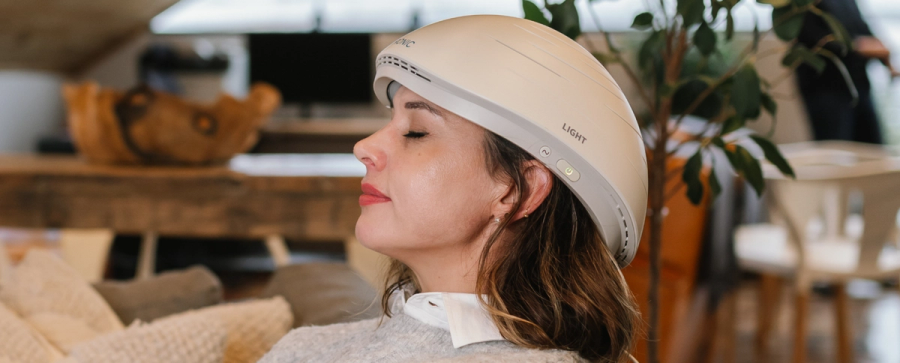
Emerging research shows that photobiomodulation (PBM) may offer a promising, non-invasive approach to improving insomnia by supporting brain function, calming the nervous system, and regulating circadian rhythms.
Emerging research shows that photobiomodulation (PBM) may offer a promising, non-invasive approach to improving insomnia by supporting brain function, calming the nervous system, and regulating circadian rhythms.

The Biological Impact of Insomnia
A lack of sleep can have several, serious biological impacts on your body. Some impacts include:
- Reduced lymphatic drainage (Valverde et al., 2023)
- Build up of amyloid-beta plaques (Shokri-Kojori et al., 2018)
- Obesity (Institute of Medicine (US) Committee on Sleep Medicine and Research, 2006).
- Myocardial infarction (Institute of Medicine (US) Committee on Sleep Medicine and Research, 2006).
- Impaired glucose tolerance (Institute of Medicine (US) Committee on Sleep Medicine and Research, 2006).
Read more about the biological impacts of sleep here.

What Causes Symptoms of Insomnia?
What leads someone to experience insomnia can vary drastically from person to person, and can also result in acute or chronic insomnia. Some causes of insomnia include:
- Family History - some forms of insomnia seem to be hereditary, with various twin studies suggesting the specific genes contributing to 50% of insomnia cases (Drake et al., 2011)
- Differences in Brain Neurophysiology - Some studies show that abnormal brain activation can lead to insomnia, and this can be linked to certain neurotransmitters, such as GABA (Levenson, Kay, & Buysse, 2015).
- Medical Conditions - other medical conditions like Parkinson’s disease or diabetes may contribute to trouble sleeping (Institute of Medicine (US) Committee on Sleep Medicine and Research, 2006).
- Mental Health Conditions - people with anxiety or depression often have impaired sleep(Institute of Medicine (US) Committee on Sleep Medicine and Research, 2006).
- Life Circumstances - certain states of life may contribute to insomnia, such as shift work, jet lag, or the new addition of a stressor (National Heart, Lung, and Blood Institute, 2022).

PBM in Sleeping Mice
In Alzheimer’s-induced mice, photobiomodulation during sleep reduced β-amyloid buildup and improved cognition more than when applied while awake (Semyachkina-Glushkovskaya et al., 2021).
FAQs
Can I use PBM right before bed?
Yes you can. While we recommend starting off using it in the daytime only, the Peace protocol at 10 Hz is a great protocol that can be used before bed to help with sleep.
Who should not use PBM?
Generally, light therapy is non-significant risk and therefore harmless to majority of the population however, We DO NOT recommend this device if you have: Metal plates, implanted stimulation devices or other metal objects in the brain, cancer/malignant tissue/active carcinoma, brain tumors, medications causing light sensitivity, open wounds on the head, pregnancy, a recent hemorrhagic stroke or other disorder, or certain hyperthyroid conditions.
What impact on the effects of insomnia can I expect to see after using PBM?
While every individual responds differently, improvements mentioned from our clients include: improvements in improved energy levels, longer duration of sleep and entering REM stage sleep.
References
- Cleveland Clinic. (2023, February 13). Insomnia. Cleveland Clinic Health Library. https://my.clevelandclinic.org/health/diseases/12119‐insomnia
- Drake, C. L., Friedman, N. P., Wright, K. P. Jr., & Roth, T. (2011). Sleep reactivity and insomnia: Genetic and environmental influences. Sleep, 34(9), 1179–1188. https://doi.org/10.5665/SLEEP.1234
- Institute of Medicine (US) Committee on Sleep Medicine and Research; Colten, H. R., & Altevogt, B. M. (Eds.). (2006). Sleep disorders and sleep deprivation: An unmet public health problem (Chapter 3: Extent and health consequences of chronic sleep loss and sleep disorders). National Academies Press. https://www.ncbi.nlm.nih.gov/books/NBK19961/
- Levenson, J. C., Kay, D. B., & Buysse, D. J. (2015). The pathophysiology of insomnia. Chest, 147(4), 1179–1192. https://doi.org/10.1378/chest.14‑1617
- National Heart, Lung, and Blood Institute. (2022, March 24). Insomnia – causes and risk factors. U.S. Department of Health and Human Services. Retrieved July 30, 2025, from https://www.nhlbi.nih.gov/health/insomnia/causes
- Salehpour, F., Farajdokht, F., Erfani, M., Sadigh‑Eteghad, S., Sandoghchian Shotorbani, S., Hamblin, M. R., Karimi, P., Rasta, S. H., & Mahmoudi, J. (2018). Transcranial near‑infrared photobiomodulation attenuates memory impairment and hippocampal oxidative stress in sleep‑deprived mice. Brain Research, 1682, 36–43. https://doi.org/10.1016/j.brainres.2017.12.040
- Semyachkina‑Glushkovskaya, O., Penzel, T., Blokhina, I., Khorovodov, A., Fedosov, I., Yu, T., Karandin, G., Evsukova, A., Elovenko, D., Adushkina, V., Shirokov, A., Dubrovskii, A., Terskov, A., Navolokin, N., Tzoy, M., Ageev, V., Agranovich, I., Telnova, V., Tsven, A., & Kurths, J. (2021). Night photostimulation of clearance of beta‑amyloid from mouse brain: New strategies in preventing Alzheimer’s disease. Cells, 10(12), 3289. https://doi.org/10.3390/cells10123289
- Semyachkina‑Glushkovskaya, O., Abdurashitov, A., Dubrovsky, A., Klimova, M., Agranovich, I., Terskov, A., Shirokov, A., Vinnik, V., Kuznecova, A., Lezhnev, N., Blokhina, I., Shnitenkova, A., Tuchin, V., Rafailov, E., & Kurths, J. (2020). Photobiomodulation of lymphatic drainage and clearance: Perspective strategy for augmentation of meningeal lymphatic functions. Biomedical Optics Express, 11(2), 725–734. https://doi.org/10.1364/BOE.383390pdfs.semanticscholar.org
- Shokri‑Kojori, E., Wang, G.-J., Wiers, C. E., Demiral, Ş. B., Guo, M., Kim, S. W., Lindgren, E., Ramirez, V., Zehra, A., Freeman, C., Miller, G., Manza, P., Srivastava, T., De Santi, S., Tomasi, D., Benveniste, H., & Volkow, N. D. (2018). β‑Amyloid accumulation in the human brain after one night of sleep deprivation. Proceedings of the National Academy of Sciences of the United States of America, 115(17), 4483–4488. https://doi.org/10.1073/pnas.1721694115
- Valverde, A., Hamilton, C., Moro, C., Billeres, M., Magistretti, P., & Mitrofanis, J. (2023). Lights at night: Does photobiomodulation improve sleep? Neural Regeneration Research, 18(3), 474–477. https://doi.org/10.4103/1673-5374.350191
- Zhang, X., Miao, X., Jiang, H., Ren, Y., Huo, L., Liu, M., & Chen, H. (2025). Advanced intervention effects of pulsed and steady transcranial photobiomodulation on sleep, mood, and EEG signal regulation. Journal of Biophotonics, 18(1), e70004. https://doi.org/10.1002/jbio.70004