8 Specific Use Cases for tPBM as a Adjunct Modality in Clinical Practices
![[object Object]](https://cdn.sanity.io/images/h29o7kl4/staging/0c0476690b5e49f9a375deb663c4d52aa39fa8e2-352x351.heif?w=352&q=80&auto=format&fit=max)
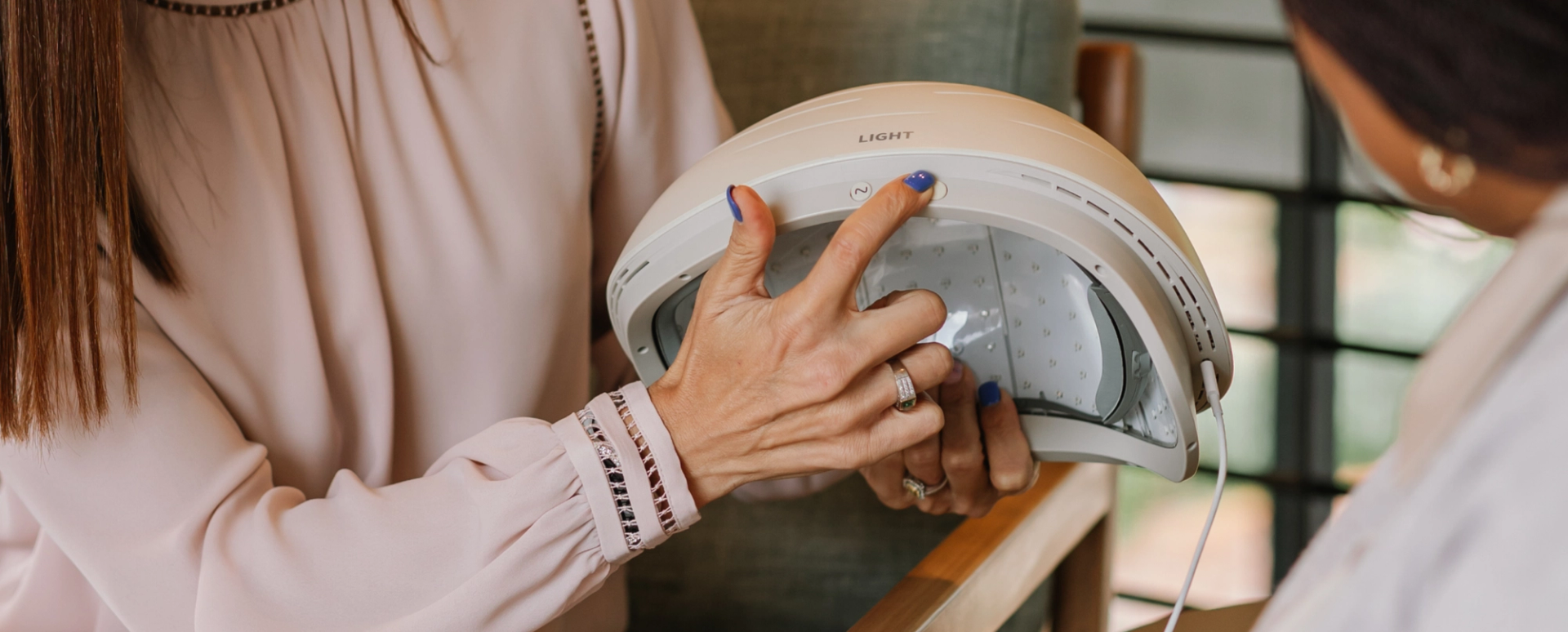
Whether you’re a neurofeedback provider, functional neurologist, cognitive therapist, or integrative clinician, you’ve likely experienced this situation before:
- Sessions begin, but progress is slow, sporadic, or stalls completely
- A client presents with low EEG power or poor mental energy
- Client compliance weans before progress is made
The issue isn’t your method - it’s the state of the brain before you start.
That’s where transcranial photobiomodulation (tPBM) is changing the game.
By applying near-infrared light to targeted cortical regions, tPBM acts as a neuroprimer before other therapies, a front-end intervention that improves:
- ATP production (de Freitas & Hamblin, 2017)
- Cerebral blood flow (Chao, 2019)
- Cortical excitability (Hao et al., 2024)
- Network coherence (Keleher et al., 2025)
The result? A visibly more responsive brain, within a few weeks.
Neuronic has helped over 300 health care professionals to integrate transcranial photobiomodulation into their practice. In this article we’ve summarized 8 of the most common, real-world use cases for you, where tPBM has shown to accelerate and amplify outcomes across brain-based practices.
Slow Responders (20+ Sessions with Minimal Gains)
Some clients don’t show significant symptomatic improvement until deep into their protocol, which is frustrating for both them and you as the clinician.
How tPBM helps:
By improving neuronal oxygenation, ATP production, and network connectivity, tPBM reduces neurofeedback session resistance and may cut required sessions by 30–50%, as reported by many clinics.
ROI: Increased client satisfaction, improved conversion on packages, reduced practitioner fatigue.

Hypervigilant or Hypoaroused Nervous Systems
Whether it’s ADHD, trauma, or developmental dysregulation, the autonomic nervous system often needs stabilization before neuroplastic work can truly begin.
How tPBM helps:
By balancing sympathetic/parasympathetic tone and promoting neurovascular equilibrium, tPBM supports smoother state transitions and faster return to regulation (Shan, Fang & Wu, 2023).
Clinical bonus: Easier session starts and fewer dropouts from overstimulation or under-engagement.

Sleep Dysregulation & Circadian Instability
Sleep disruption is one of the most common upstream blockers to progress across brain-based therapies. Poor sleep undermines the brain’s ability to provide the resources necessary to repair, create, and function optimally.
How tPBM helps:
tPBM has been shown to support sleep quality and latency through various mechanisms, such as supporting glymphatic drainage, and improving cerebral blood flow to enhance recovery.
Clinical impact: Better sleep results in improved brain efficiency, resulting in faster recovery.

Impaired Functional Connectivity
Conditions like major depression, motor disorders, and cognitive decline often involve poorly synchronized brain regions (Gruber et al., 2023; Suo et al., 2023; Shi et al., 2025).
How tPBM helps:
tPBM helps synchronize communication between key areas, improving overall connectivity, likely through increasing blood flow and cellular metabolism in these areas (Urquhart et al., 2020).
Result: Smoother protocol execution and stronger gains from neuromodulation.

Low Motivation or Emotional Flatness
Clients stuck in apathy, anhedonia, or low motivation often find it difficult to stay engaged - especially when results are subtle or delayed.
How tPBM helps:
Red light stimulation has been associated with increased serotonin and dopamine regulation, as well as BDNF (brain-derived neurotrophic factor) - enhancing mood, motivation, and engagement (de Oliveira et al., 2024).
What changes: Clients start showing up with more energy, curiosity, and willingness to stick with the process.
Protocol Compliance Challenges
Even when the science is strong, many clients drop out before completing their full training plan due to a lack of early success
How tPBM helps:
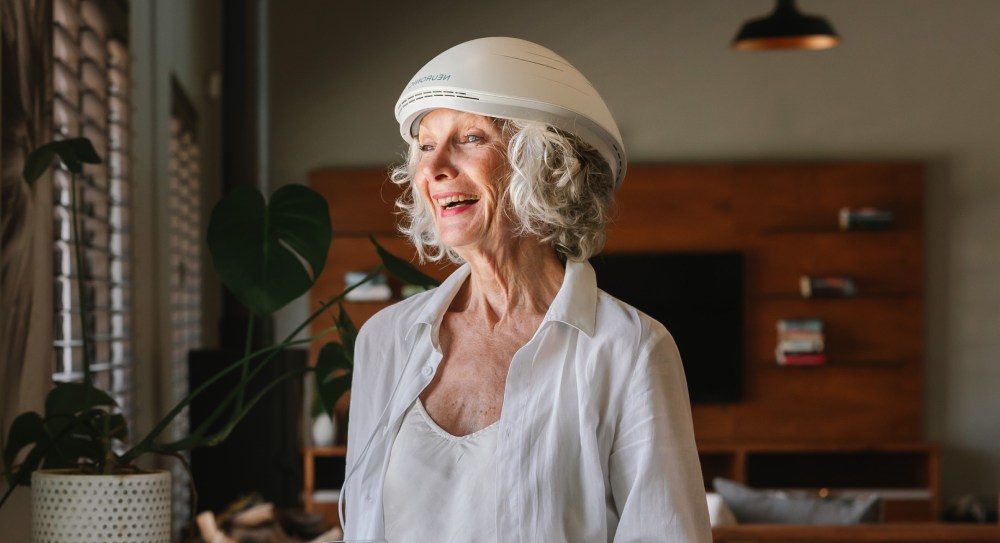
By offering an immediate and perceptible benefit - such as clearer thinking, improved mood, or better sleep - tPBM provides tangible proof that “something is happening.” tPBM can be used in conjunction with other modalities or activities to make in-clinic or at home use seamless.
Effect: Increased buy-in, longer retention, and higher program completion rates.

Low Power EEG Maps
Clients with flat, underpowered EEGs - often seen in burnout, long-COVID, chronic fatigue, or trauma - lack the physiological energy to engage with neurofeedback or cognitive therapies effectively.
How tPBM helps:
It stimulates mitochondrial activation, rapidly increasing cellular energy (ATP) and cortical excitability, allowing for training to show its benefits sooner (de Freitas & Hamblin, 2017).
Clinical impact: Reduces session “dead time” and improves initial responsiveness.
Future-Proofs Your Clinic
As clients become more informed and discerning, the demand for multi-modal, tech-forward brain optimization is growing.
How tPBM helps:
Adding a validated, high-impact modality like tPBM elevates your clinic's positioning. It signals innovation, integrative thinking, and personalized care.
Business edge: You attract higher-quality clients, increase your average client value, and differentiate from "single-modality" providers in your market.
Final Thought: tPBM Is an Amplification of Your Core Modalities, Not a Replacement
Whether your specialty is neurofeedback, brain coaching, functional neurology, or trauma recovery, tPBM works upstream, preparing the brain to respond faster, deeper, and more consistently.
It’s a smart, evidence-backed way to:
- Overcome stalled cases
- Reduce session fatigue
- Boost outcomes and retention
- Future-proof your clinical model
Want to see how tPBM could be integrated into your practice?
📅 Book a Free Strategy Call with Our Team
References:
Chao, L. L. (2019). Effects of home photobiomodulation treatments on cognitive and behavioral function, cerebral perfusion, and resting-state functional connectivity in patients with dementia: A pilot trial. Photobiomodulation, Photomedicine, and Laser Surgery, 37(3), 133–141. https://doi.org/10.1089/photob.2018.4555
de Oliveira, B. H., Lins, E. F., Kunde, N. F., Salgado, A. S. I., Martins, L. M., Bobinski, F., Vieira, W. F., Cassano, P., Quialheiro, A., & Martins, D. F. (2024). Transcranial photobiomodulation increases cognition and serum BDNF levels in adults over 50 years: A randomized, double-blind, placebo-controlled trial. Journal of Photochemistry and Photobiology B: Biology, 260, Article 113041. https://doi.org/10.1016/j.jphotobiol.2024.113041
Freitas, L. F. de, & Hamblin, M. R. (2016). Proposed mechanisms of photobiomodulation or low-level light therapy. IEEE Journal of Selected Topics in Quantum Electronics, 22(3), 7000417. https://www.ncbi.nlm.nih.gov/pmc/articles/PMC5215870/
Gruber, M., Mauritz, M., Meinert, S., Grotegerd, D., de Lange, S. C., Grumbach, P., Goltermann, J., Winter, N. R., Waltemate, L., Lemke, H., Thiel, K., Winter, A., Breuer, F., Borgers, T., Enneking, V., Klug, M., Brosch, K., Meller, T., Pfarr, J.-K., Ringwald, K. G., … Dannlowski, U. (2023). Cognitive performance and brain structural connectome alterations in major depressive disorder. Psychological Medicine, 53(14), 6611–6622. https://doi.org/10.1017/S0033291722004007
Hao, W., Dai, X., Wei, M., Li, S., Peng, M., Xue, Q., Lin, H., Wang, H., Song, P., & Wang, Y. (2024). Efficacy of transcranial photobiomodulation in the treatment for major depressive disorder: A TMS-EEG and pilot study. Photodermatology, Photoimmunology & Photomedicine, 40(2), e12957. https://doi.org/10.1111/phpp.12957
Keleher, F., Esopenko, C., Lindsey, H. M., Newsome, M. R., Johnson, P. K., Jain, D., Hovenden, E. S., Thayn, D., McCabe, C. M., Russell, H. A., Welsh, R. C., Mullen, C. M., Velez, C., Read, E. N., Larson, M. J., Davidson, L. E., Liebel, S. W., Tate, D. F., Carr, L. S., & Wilde, E. A. (2025). Improvements in resting-state functional connectivity of the cerebellum after transcranial photobiomodulation in adults with a history of repetitive head acceleration events. Photobiomodulation, Photomedicine, and Laser Surgery, 43(10), 475–489. https://doi.org/10.1177/25785478251376477
Shan, Y.-C., Fang, W., & Wu, J.-H. (2023). A system based on photoplethysmography and photobiomodulation for autonomic nervous system measurement and adjustment. Life, 13(2), 564. https://doi.org/10.3390/life13020564
Shi, Y., Li, Y., Ci, R., Yan, S., Tian, T., Zheng, N., Zhu, W., & Qin, Y. (2025). Dynamic functional connectivity and transcriptomic signatures reveal stage-dependent brain network dysfunction in Alzheimer’s disease spectrum. Alzheimer’s Research & Therapy, 17, Article 247. https://doi.org/10.1186/s13195-025-01898-1
Suo, X., Lei, D., Li, N., Peng, J., Chen, C., Li, W., Qin, K., Kemp, G. J., Peng, R., & Gong, Q. (2022). Brain functional network abnormalities in Parkinson’s disease with mild cognitive impairment. Cerebral Cortex, 32(21), 4857–4868. https://doi.org/10.1093/cercor/bhab520
Urquhart, E. L., Wanniarachchi, H., Wang, X., Gonzalez-Lima, F., Alexandrakis, G., & Liu, H. (2020). Transcranial photobiomodulation-induced changes in human brain functional connectivity and network metrics mapped by whole-head functional near-infrared spectroscopy in vivo. Biomedical Optics Express, 11(10), 5783–5799. https://doi.org/10.1364/BOE.402047

Neuronic LIGHT
$1,795
At-home near-infrared brain stimulation designed to support clarity, focus, and long-term cognitive wellness.
- 90-Day Return Policy
- Backed by Research
- Free Shipping
- One Year Warranty