The Brain Tool for Autism That's Getting Serious Attention
![[object Object]](https://cdn.sanity.io/images/h29o7kl4/staging/ff53226fede55001781c911b5171e43dd7477ade-795x795.webp?w=795&q=80&auto=format&fit=max)
More Kids Are Being Diagnosed with Autism. Does Light Hold the Answer?
By The Neuronic Team • July 30, 2025
More children are being diagnosed with autism than ever before–jumping from one in 150 to one in 44 in the U.S. between 2000 and 2018 (Talantseva et al 2023).
For many families, navigating treatments can feel overwhelming, especially when medications come with side effects and therapy doesn’t always help.
That’s why new research into photobiomodulation (PBM) is offering hope as a gentle, science-backed tool that could ease core symptoms and improve quality of life.
What Does It Mean to Have Autism?
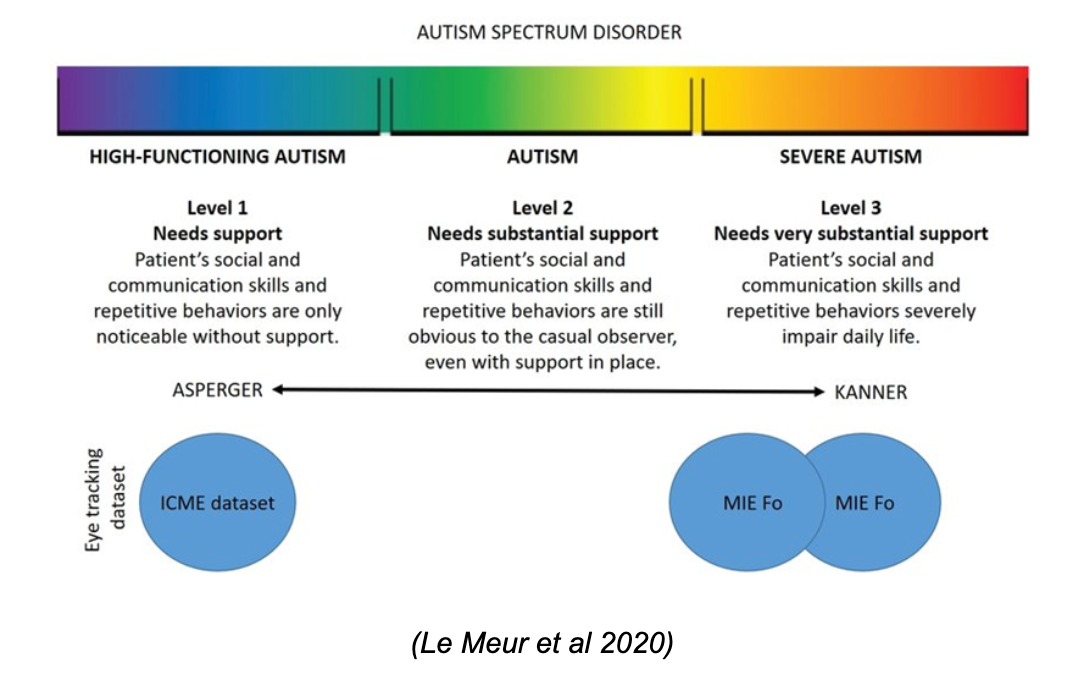
Autism (sometimes abbreviated ASD) is a neurodevelopmental condition typically diagnosed in childhood. It affects how a person communicates, interacts socially and experiences the world. Because it’s a spectrum, autism presents differently in everyone, from mild social challenges to more intensive support needs. Clinicians categorize ASD into three levels, depending on how much daily support someone may require.
What Makes tPBM a Promising Addition to Conventional Autism Therapies?
There’s no known cure for autism and current medications don’t target root cause symptoms, they’re mainly used to manage related issues like anxiety or aggression, often with unwanted side effects.
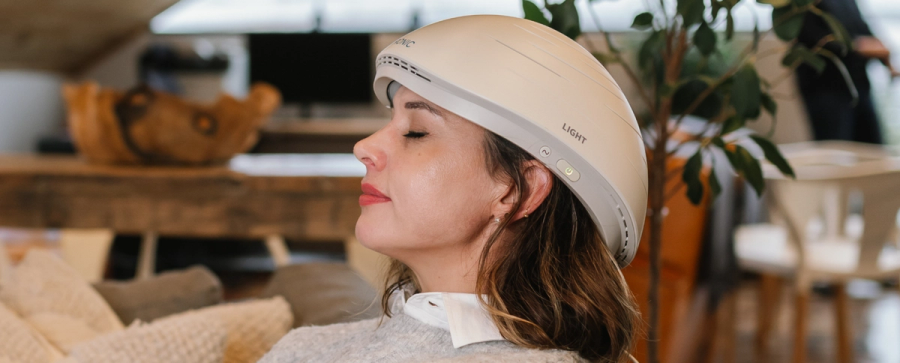
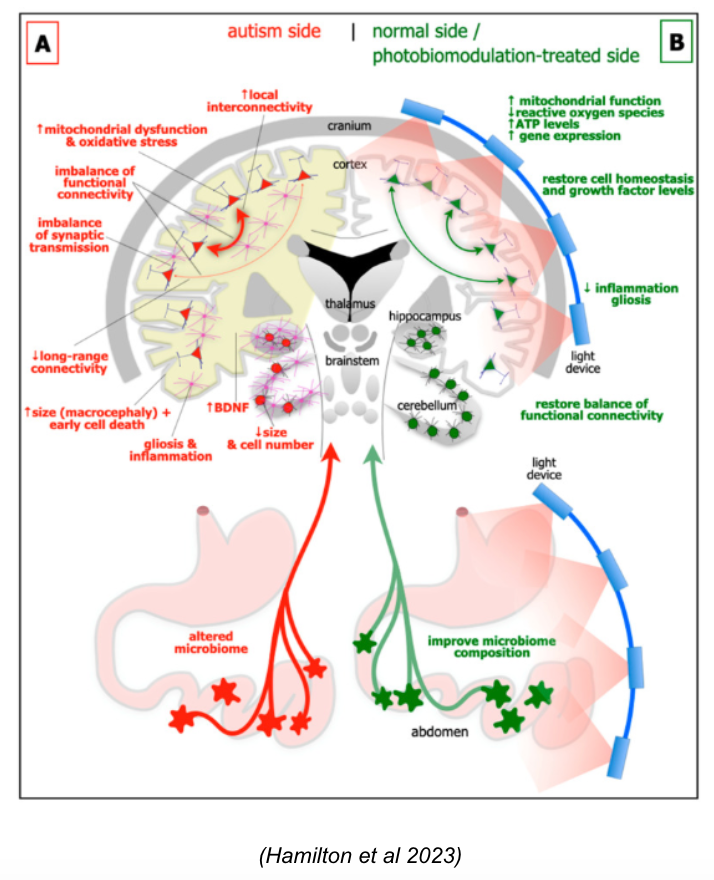
That’s why transcranial photobiomodulation (tPBM) is exciting, it offers a promising drug-free approach that can improve symptoms and quality of life for both individuals with autism and their caregivers.
3 Powerful Effects of tPBM on ASD
🧠 Restoring Brainwave Balance: PBM may normalize brain activity in children with ASD by reducing delta/theta waves and increasing gamma, which is linked to focus, cognition, and emotional regulation (Leisman et al 2018)
🔬 Mitochondrial Boost: PBM supports energy production in brain cells, addressing the mitochondrial dysfunction more common in individuals with ASD (Hamilton et al 2022).
💡 Improved Blood Flow: PBM enhances oxygen and nutrient delivery to brain regions tied to speech, learning, and emotional processing (Liu et al 2023).
STUDY #1: PBM Improves Behavior in Children with Autism
Effects of Low-Level Laser Therapy (LLLT) in Autism Spectrum Disorder - Leisman et al., 2018
- Who? 41 children and teens with ASD (ages 5–17)
- What? 8 sessions (5 min each) over 4 weeks, LLLT applied to skull base + temporal areas
- How? Randomized, placebo-controlled trial
What They Found:
- ↓Irritability reduction (Aberrant Behavior Checklist scores) in the active group
- 20/21 showed symptom improvement
- All active participants improved on CGI scores (vs. none in placebo group)
🔑 Main takeaway: In just 4 weeks, children receiving LLLT showed dramatic improvements in irritability and behavior—with 95% reporting symptom relief. A promising case for PBM as a gentle, effective support tool.
STUDY #2: PBM for Autism Spectrum Disorder in Young Children
Transcranial photobiomodulation for reducing symptoms of autism spectrum disorder and modulating brain electrophysiology in children aged 2-7: an open label study - Fradkin et al., 2025
- Who? 23 children (ages 2–7) diagnosed with ASD
- What? 850 nm near-infrared light pulsed at 40 Hz, targeting Default Mode Network, Broca’s, Wernicke’s & Occipital areas. Sessions 2x/week for 10 weeks, increasing gradually from 2 to 12 minutes.
- How? Childhood Autism Rating Scale (CARS-2) + EEG
What They Found:
- 7-point drop in CARS-2 scores
- ↓ Delta power (linked to reduced neuroinflammation)
- ↑ Gamma + beta power (associated with better cognition + memory)
🔑 Main takeaway: PBM may ease ASD symptoms by modulating brain activity - especially when applied consistently over time.
Reimagining What’s Possible
While there’s still much to learn, PBM is emerging as a compelling addition to the autism treatment toolkit: one that’s safe, non-invasive, and based in real science.
We’ll continue following the research and sharing insights as they emerge.
🎥 Discussion Rounds: July Wrap-Up With Neuroscientist Dr. Ryan D’Arcy + August Preview
Thanks to everyone who joined us for: tPBM’s Benefits for Cognitive Performance, Concussion, & Aging Brain Health with Dr. Ryan D'Arcy.
🧾 Watch the recording → Click here to access it
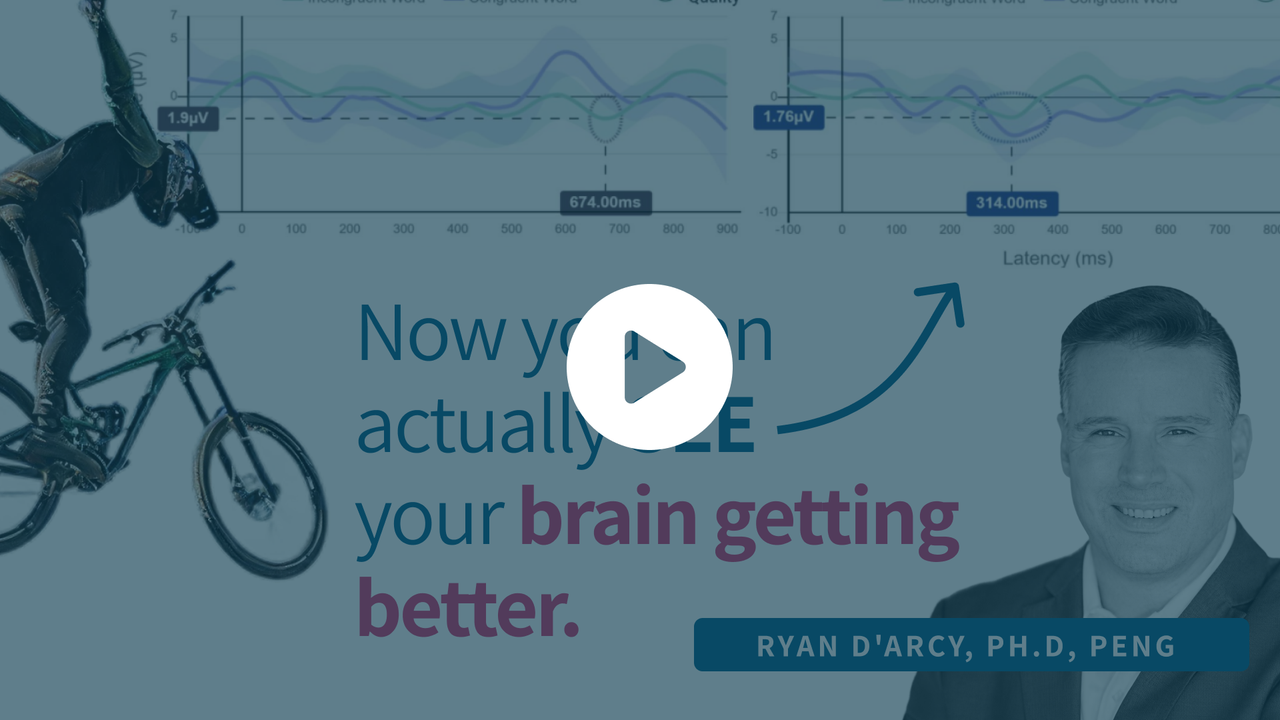
📖 Read a summary of the presentation on our blog: 🔗 How Brain Vital Signs and Photobiomodulation Are Shaping the Future of Brain Health by Nicole Greig, Clinical Integration Specialist
Continued Reading
We’ve published several important articles, blogs, and press releases this month — here's what you need to catch up on from Neuronic:
- 🔍 Transcranial Photobiomodulation as an Adjunctive Therapy for Persistent Anxiety and Depression in Patients Undergoing Psychotherapy, EMDR, and/or SSRI Treatment: A Case Series Case series on anxiety using Neuronic helmets available on Science Direct.
- 🥊 How Photobiomodulation (PBM) Could Help UFC Fighters Optimize Performance, Recover Faster and Fight Smarter How UFC athletes are using light for faster brain recovery.
- 🃏 How Top Poker Players Could Boost Focus and Mental Stamina—Without Drug Why mental endurance matters at the poker table—and how PBM might help.
- 🧬 Light Therapy by Wavelength: Red, White & Blue Explained Not all light is equal—see what each color does for your brain.
- 💼 BusinessWire: UFC Fighters Turning to Light Therapy for Brain Recovery and Performance: Neuronic tPBM Helmets at the Center of a Growing Trend Our most recent press release.
References:
Fernandes, Filipa. “Devices used for photobiomodulation of the brain—a comprehensive and systematic review.” Journal of NeuroEngineering and Rehabilitation, 2024.
Hamilton, Catherine. “Lights on for Autism: Exploring Photobiomodulation as an Effective Therapeutic Option.” Neurology International, 2022. National Library of Medicine.
Le Meur, Olivier. “From Asperger autism to Kanner syndromes, the difficult task to predict where ASD people look at.” 2020. Liu, Hanli. “Transcranial photobiomodulation with near-infrared laser increases cerebral blood flow and oxidized cytochrome c oxidase.” Neural Regeneration Research, 2023.
Talantseva, Oksana. “The global prevalence of autism spectrum disorder: A three-level meta-analysis.” Frontiers in Psychiatry, 2023. National Library of Medicine.
Co-authors
![[object Object]](https://cdn.sanity.io/images/h29o7kl4/staging/69199a23a99a46002d0342c069c4d796b9f18e11-352x351.png?w=352&q=80&auto=format&fit=max)

Neuronic LIGHT
$1,795excl. sales tax
At-home near-infrared brain stimulation designed to support clarity, focus, and long-term cognitive wellness.
- 90-Day Return Policy
- Backed by Research
- Free Shipping
- One Year Warranty