Why some light therapy reaches the brain… and some doesn’t
![[object Object]](https://cdn.sanity.io/images/h29o7kl4/staging/ff53226fede55001781c911b5171e43dd7477ade-795x795.webp?w=795&q=80&auto=format&fit=max)
Light therapy is everywhere right now.
From LED face masks, to full-body panels, to brain devices, photobiomodulation has expanded rapidly across beauty, wellness, and clinical medicine.
But something important often gets lost in the conversation.
Not all light therapy is designed for the same tissue.
The wavelength of light determines how deeply it can travel in the body and which biological systems it affects.
Understanding this difference is key to understanding how light therapy supports skin health, but also how it supports brain health.
Light therapy for skin
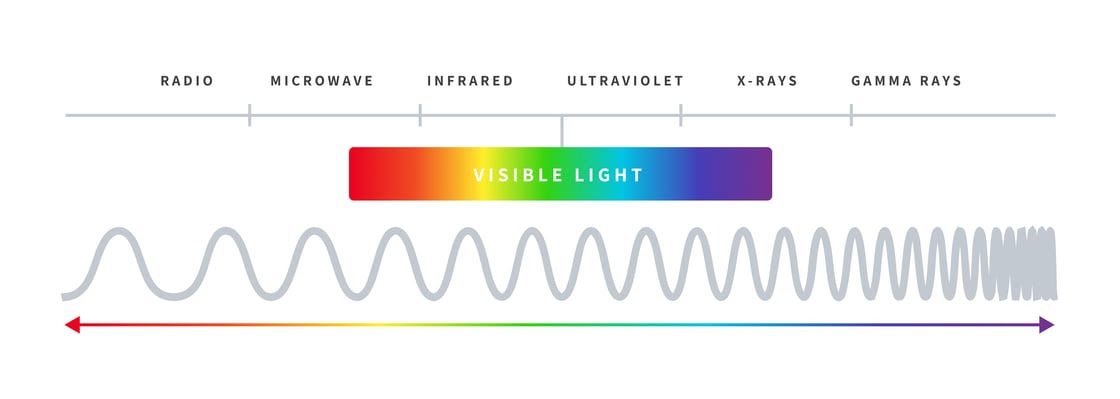
Many LED face masks use red light wavelengths around 630–660 nm. These wavelengths interact primarily with superficial tissue.
In dermatology, red light has been studied for its ability to stimulate fibroblast activity and collagen production in the dermis. Clinical reviews report measurable improvements in wrinkle depth, skin elasticity, and acne with consistent use (1,2).
In other words, these devices are engineered specifically for skin tissue. And when used for that purpose, they definitely can be effective.
Why the brain is different
The brain sits beneath multiple biological layers:
- skin
- connective tissue
- scalp
- the skull
For light to influence neuronal tissue, it must penetrate through these structures. This is where near-infrared wavelengths become important.
Brain-directed PBM typically uses wavelengths between 810 nm and 1070 nm.
These longer wavelengths scatter less and are absorbed less by superficial tissue, allowing a portion of the light to reach deeper cortical structures (4).
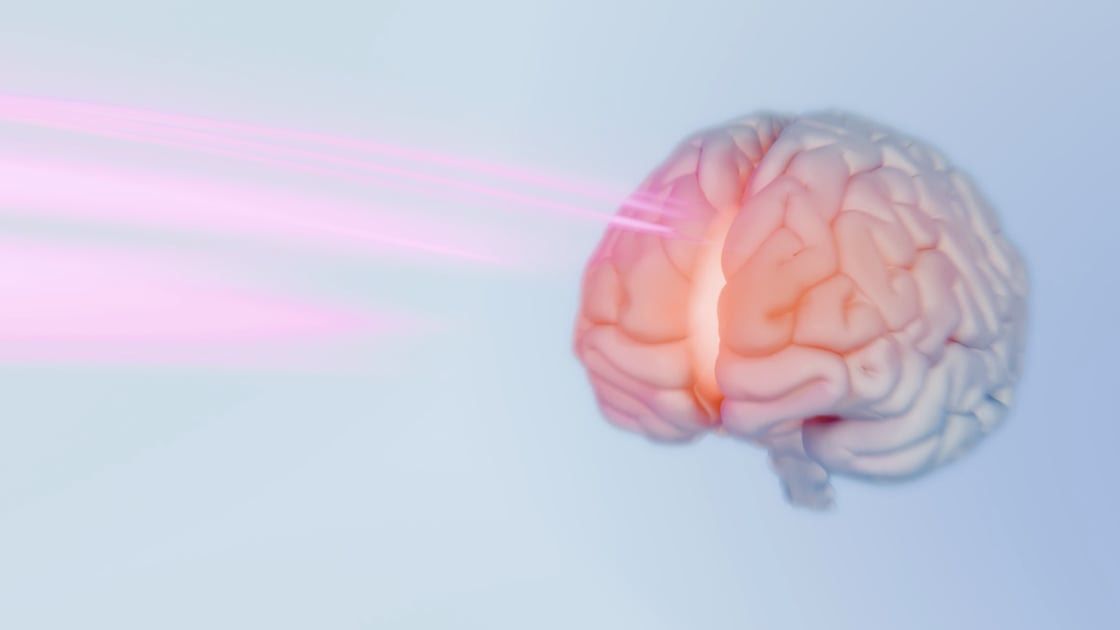
Because of this property, near-infrared light has become the focus of research into transcranial photobiomodulation (tPBM).
What happens when neurons absorb light?
Much of the interest in brain photobiomodulation centers around mitochondria, the energy-producing structures inside cells.
Neurons require enormous amounts of energy to maintain electrical signaling, synaptic communication, and cellular repair.
Near-infrared light interacts with an enzyme in the mitochondrial respiratory chain called cytochrome c oxidase. Laboratory and clinical research suggests this interaction may influence cellular energy metabolism and inflammatory signaling pathways (7).
In simple terms: Light may help support the energy systems that neurons rely on.
What the research is exploring
Clinical research into tPBM is still developing, but several areas of investigation are emerging. Studies have reported potential effects related to:
- improved sleep metrics and reductions in anxiety symptoms (5)
- improved attention and working memory in healthy adults (6)
- modulation of cerebral blood flow and inflammatory pathways (7)
These findings do not suggest that light therapy is a cure for neurological disease.
However, they do support continued investigation into how light may influence brain physiology.
Key idea: wavelength matters
It is tempting to think of light therapy as a single category of technology.
But, biologically, it is far more nuanced.
Photobiomodulation is wavelength-specific, dose-specific, and tissue-specific.
Small differences in wavelength can produce large differences in how light interacts with the body.
Red light may support skin health.
Near-infrared light may reach deeper biological systems.
Understanding those distinctions helps explain why devices designed for cosmetic applications are not the same as devices engineered for transcranial delivery.
A shift in how we think about light
As interest in light therapy grows, the question is no longer simply:
“Does light therapy work?”
Instead, the more meaningful questions are:
- What wavelength is being used?
- What tissue is being targeted?
- How much energy reaches that tissue?
These details are what determine whether light interacts with the skin, muscles, or potentially the brain.
The future of brain-directed photobiomodulation
Transcranial photobiomodulation represents a growing area of research at the intersection of neuroscience, brain metabolism, and light-based neurotechnology.
As research continues to evolve, one thing is becoming increasingly clear:
Precision matters when working with the brain.
And in light therapy, precision begins with wavelength.
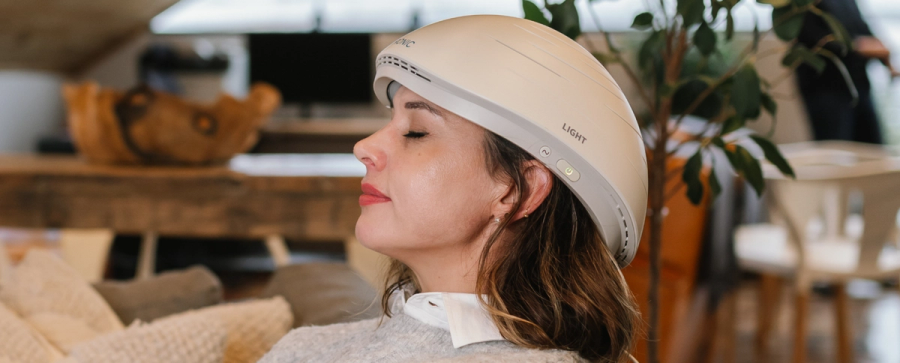
Neuronic devices are engineered specifically for brain-directed photobiomodulation, using a near-infrared wavelength of 1070 nm, which has been studied for its ability to penetrate deeper biological tissue.
Continued Reading
Have you enjoyed what you've read so far? Head on over to our blog!
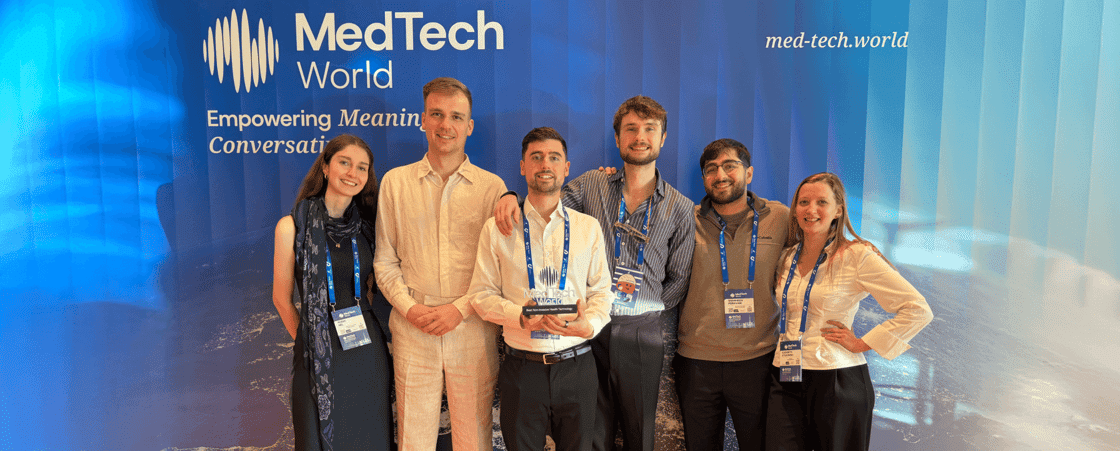
Neuronic was awarded Best Non-Invasive Health Technology of the Year 2026 at MedTech World Middle East in Dubai, marking a major milestone in the company’s global expansion and its official launch into the Middle East.
That’s a Wrap for March!
Whether you're a researcher, trying light therapy for yourself, or just exploring new possibilities, we’re grateful to have you in our community.
See you in April!
References
- Avci P, Gupta A, Sadasivam M, et al. Low-level laser (light) therapy (LLLT) in skin: stimulating, healing, restoring. Seminars in Cutaneous Medicine and Surgery. 2013.
- Wunsch A, Matuschka K. A controlled trial to determine the efficacy of red and near-infrared light treatment in patient satisfaction, reduction of fine lines, wrinkles, skin roughness, and intradermal collagen density increase. Photomedicine and Laser Surgery. 2014.
- Michael R. Hamblin. Mechanisms and mitochondrial redox signaling in photobiomodulation. Photochemistry and Photobiology. 2018.
- Jagdeo JR, Adams LE, Brody NI, Siegel DM. Transcranial red and near infrared light transmission in a cadaveric model. PLoS ONE. 2012.
- Caldieraro MA, Cassano P. Transcranial photobiomodulation for generalized anxiety disorder: a pilot study. Journal of Affective Disorders. 2019.
- Vargas E, Barrett DW, Saucedo CL, et al. Beneficial neurocognitive effects of transcranial laser in older adults. Photomedicine and Laser Surgery. 2017.
- Michael R. Hamblin. Photobiomodulation for traumatic brain injury and stroke. Journal of Neuroscience Research. 2018.
Get Your Custom PBM Integration Strategy – Built for Clinicians and Other Professionals
In 15 minutes, you’ll walk away with a clear plan to implement PBM safely, compliantly, and without disrupting client care.
Or Give us a Call: +1 (209) 268-7839