Does Near Infrared Light at 1070 nm Really Reach the Brain?
![[object Object]](https://cdn.sanity.io/images/h29o7kl4/staging/ff53226fede55001781c911b5171e43dd7477ade-795x795.webp?w=795&q=80&auto=format&fit=max)

Does Near Infrared Light at 1070 nm Really Reach the Brain?
Light is a form of energy made up of tiny packets called photons, which travel in waves across a broad spectrum, from high-energy ultraviolet (UV) to visible light and into low-energy infrared (IR). Each wavelength carries a different amount of energy, which is why different types of light interact with the body in unique ways. For example, UV light has short, high-energy wavelengths that can trigger chemical reactions in the skin, while visible light allows us to see by activating photoreceptors in the eye. Longer wavelengths like red and near-infrared penetrate deeper into tissues, where they can influence cellular energy production and healing. In essence, the specific wavelength of light determines the unique way in which it interacts with matter.
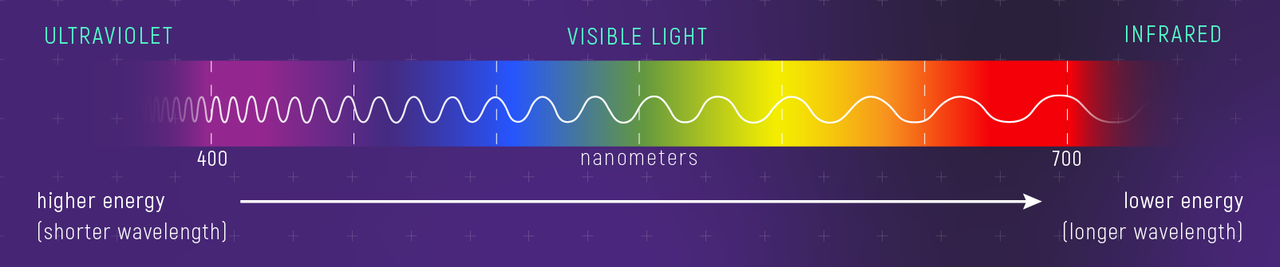
Wavelength, Tissue Penetration, and the Challenge of Reaching the Brain
Why Wavelength Determines How Deep Light Can Travel
Light penetration, in physics, is purely about how photons interact with matter, when a photon enters biological tissue, one of three things happens: it can be absorbed, scattered or transmitted. “Penetration” refers to how far photons can travel before absorption or scattering. This distance is determined almost entirely by the wavelength, the distance between wave peaks, which determines how it behaves as it travels through the body, different molecules (water, hemoglobin, lipids, proteins) preferentially absorb different parts of the electromagnetic spectrum.For example, shorter wavelengths like green and blue light penetrate only a few millimeters, and as such is effectively used for superficial conditions like acne, because it targets the upper layers of the skin where sebaceous glands and acne-causing bacteria reside.
Why Most Light Never Reaches the Brain
In contrast, near-infrared (NIR) light penetrates much deeper into tissue and can travel centimeters through tissue passing through skin, bone and other biological layers, more effectively. For light to get into the brain it must pass through the hair, scalp, skull and cerebrospinal fluid, all of which act as filters. Only certain wavelengths, primarily in the near-infrared window, are able to penetrate far enough to reach cortical tissue, the superficial layers of the cortex, the parts closest to the skull. These are the most likely regions to receive any photons that make it through the scalp, skull and meninges during transcranial photobiomodulation (tPBM).
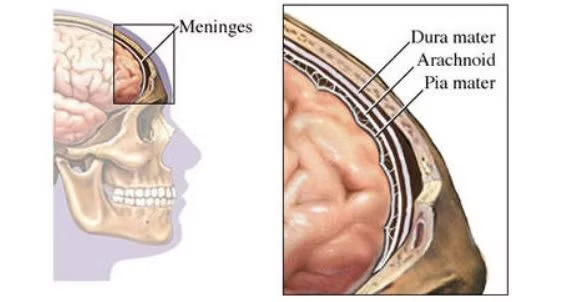
Why Neuronic Uses 1070nm Near-Infrared Light
Neuronic devices utilize 1070 nm near-infrared light, a wavelength with superior tissue penetration properties compared to shorter wavelengths. While wavelengths in the 800–850 nm range have been widely studied for mitochondrial activation (Hamblin, 2016), they also exhibit higher scattering and absorption coefficients in skin and bone (Jacques, 2013). In contrast, longer wavelengths such as 1070nm experience reduced scattering and greater optical penetration depth (Liu et al., 2020). This allows a higher proportion of photons to reach subcranial structures including the meninges and cortical vasculature, even at moderate power densities.
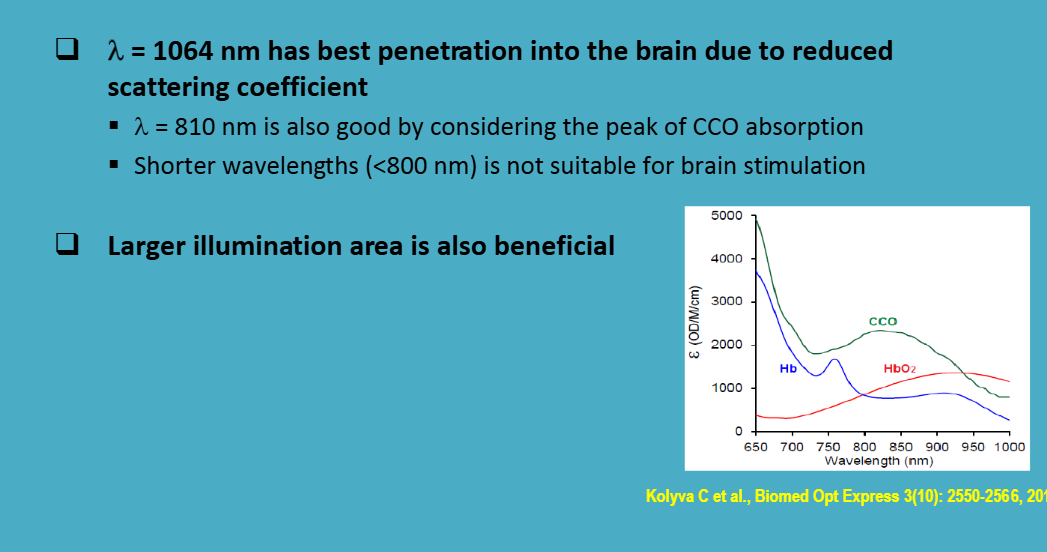
Reduced Scattering and Greater Optical Penetration at 1070nm
1070 nm is a particularly effective wavelength because it scatters less than shorter near-infrared light, allowing photons to maintain a more forward, directed path through tissue. At the same time, water absorption at this wavelength has not yet risen sharply, meaning fewer photons are lost to absorption. Together, these properties enable 1070nm light to penetrate biological tissues more efficiently and reach deeper layers compared to many other shorter wavelengths.
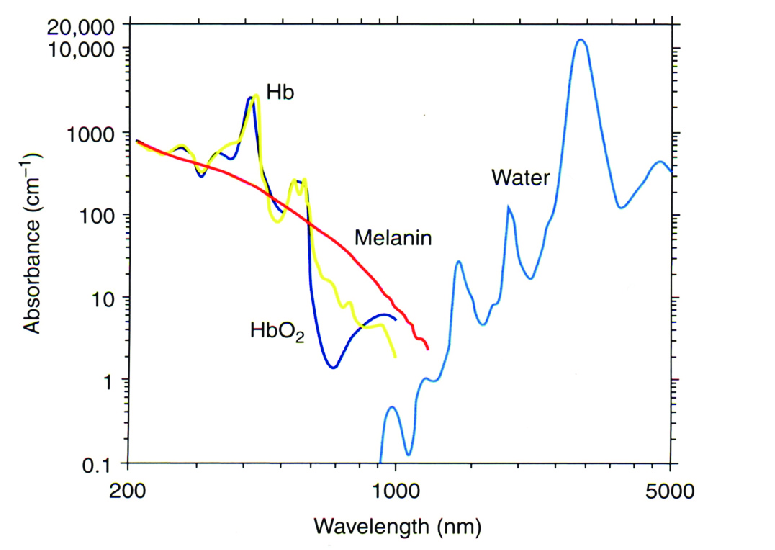
Does Light Need to Reach the Brain to Have an Effect?
Direct vs Indirect Mechanisms of Photobiomodulation
An important question in the field of PBM is whether light must physically reach the brain to have an effect. The short answer is, not always. Direct intracranial photon delivery is possible but limited, photobiomodulation does not rely exclusively on direct photon absorption, systemic pathways like circulatory, neurological and immunological, allow light applied peripherally (to the body) to influence brain physiology even when only small photon quantities arrive intracranially. This means light applied peripherally may still produce brain-related benefits, even without significant photon delivery into the brain itself. Although only a small proportion of NIR photons reach the cortical surface, this is sufficient to also elicit systemic and local neurobiological effects.
Systemic Signaling and the Role of Circulating Mitochondria
Recent findings show that mitochondria are not confined to the interior of cells, a population of extracellular, free-floating mitochondria circulates in human blood and retains functional capacity (Song et al, 2020) These mitochondria appear to act as systemic signaling organelles, influencing immune activity and metabolic regulation at distant sites. PBM may interact with this circulating mitochondrial pool, providing a mechanism for systemic effects even when light does not directly reach deep tissues or the brain. For example, Stephenson et al. (2020) demonstrated that human plasma contains intact, respiration-competent extracellular mitochondria capable of modulating immune cell behavior, suggesting that PBM-induced mitochondrial activation in peripheral tissues could propagate signals throughout the body (Stephenson et al., 2020). This framework helps explain why PBM applied to superficial or peripheral regions can produce measurable changes in inflammation, metabolism and neural function independent of direct intracranial photon delivery.
Effects on Cerebral Blood Flow and Neurovascular Function
Studies show that NIR light enhances nitric oxide release (Poyton & Ball, 2011), improves cerebral blood flow and oxygenation (Henderson & Morries, 2015), and modulates neurovascular coupling (changes in how efficiently blood vessels respond to the needs of active neurons).
Furthermore, activation of mitochondria-rich peripheral tissues, such as the scalp, vasculature and meninges may trigger secondary signaling cascades that influence intracranial metabolism and inflammation (Salehpour et al., 2019).
Immunomodulation, Microglia, and Neurodegeneration
Recent evidence highlights the wavelength-specific effects of 1070nm light on microglial polarization, the process by which microglia, the brain’s immune cells, shift into different functional states depending on the signals they receive from their environment.
How 1070 nm Shifts Microglia From Inflammation to Repair
Experimental data from Alzheimer’s disease models indicate that 1070nm PBM shifts microglia from a pro-inflammatory (M1) to an anti-inflammatory (M2) phenotype (Huang et al., 2022).
This phenotypic transition is associated with increased beta-amyloid clearance, decreased neuroinflammation and improved neuronal viability. Such outcomes underscore the importance of wavelength precision in achieving targeted neuromodulatory effects.
Mitochondrial Energy Mechanisms of 1070 nm Light
Red light is known to strongly activate cytochrome c oxidase (CCO), the mitochondrial enzyme that stimulates ATP production by passing electrons along the respiratory chain. Longer wavelengths such as 1070nm also influence mitochondria, but through a broader mix of mechanisms.
Beyond Cytochrome c Oxidase
For example, a study using 1064nm laser light found effects on several mitochondrial respiratory complexes (I, III, IV and V). These complexes are the protein machines that generate cellular energy and include components like iron–sulfur clusters that move electrons inside mitochondria and copper centers (metals that help enzymes transfer electrons efficiently) (Ravera et al., 2019). This study also showed that these changes occurred without producing heat, meaning the effects were photochemical. In living humans, 1070 nm light has been shown to increase levels of oxidized CCO (the active form of the enzyme) and improve hemoglobin oxygenation more consistently than 800nm light, likely because 1070nm penetrates deeper into tissue (Owen et al., 2022).
Mitochondrial Retrograde Signaling
Recent reviews indicate that longer wavelength near-infrared light (above 1000nm) can activate mitochondrial retrograde signaling, a cellular communication pathway in which mitochondria relay metabolic changes back to the nucleus to adjust gene expression. This response is mediated in part by small, regulated increases in reactive oxygen species (ROS) and nitric oxide (NO), which function as signaling molecules at low concentrations. These signals help coordinate adaptive responses such as enhanced cellular metabolism, improved stress resistance and activation of repair pathways (Hamblin, 2018).
Summary — Why 1070 nm Near-Infrared Light Is Biologically Distinct
Light interacts with the body according to its wavelength, which determines how deeply photons penetrate and which molecules absorb them. While UV and visible light are absorbed quickly, red and near-infrared (NIR) wavelengths penetrate much deeper into tissue. Only certain NIR wavelengths can pass through the scalp and skull to reach superficial cortical areas, with 1070 nm standing out because it scatters less and is not yet strongly absorbed by water, allowing more photons to reach subcranial structures than shorter NIR wavelengths.
tPBM works through both direct and indirect mechanisms: a small portion of photons reach the cortex, while peripheral absorption in the scalp, vasculature and meninges triggers systemic signaling. NIR light increases nitric oxide, improves cerebral blood flow and modulates neurovascular coupling. In neurodegenerative models, 1070nm shifts microglia toward an anti-inflammatory state.
At the mitochondrial level, red light activates CCO, while longer wavelengths such as 1070nm affect multiple respiratory complexes through different photochemical mechanisms. These wavelengths can also trigger mitochondrial retrograde signaling, where small increases in reactive oxygen species and nitric oxide act as messengers that adjust nuclear gene expression.
Together, these mechanisms highlight the unique biological advantages of longer-wavelength NIR light for influencing brain metabolism, inflammation and cellular resilience.
References
Hamblin MR. Mechanisms and applications of the anti-inflammatory effects of photobiomodulation. AIMS Biophysics. 2017.
Huang YY, Chen AC, Carroll JD, Hamblin MR. Biphasic dose response in low level light therapy. Dose Response. 2011.
Jacques SL. Optical properties of biological tissues: a review. Phys Med Biol. 2013.
Karu TI. Primary and secondary mechanisms of action of visible to near-IR radiation on cells. J Photochem Photobiol B. 1999.
Henderson TA, Morries LD. Near-infrared photonic energy penetration: can infrared phototherapy effectively reach the human brain? Neuropsychiatr Dis Treat. 2015.
Poyton RO, Ball KA. Therapeutic photobiomodulation: nitric oxide and a novel function of mitochondrial cytochrome c oxidase. Discovery Medicine. 2011.
Salehpour F, Cassano P, et al. Transcranial photobiomodulation therapy for brain disorders: clinical outcomes, mechanisms, and future prospects. Rev Neurosci. 2019.
Liu TC et al. Optical penetration depth of near-infrared light in human skull. J Biophotonics. 2020.
Huang J et al. 1070-nm light modulates microglia polarization and improves cognitive function in Alzheimer’s disease model mice. Front Cell Neurosci. 2022.

Subscribe for insights, tips, offers & more.
By signing up, you accept our privacy policy. Your personal data will be processed so that we can contact you about our products. Read our Privacy Policy for more information.