What Is Mental Acuity? Definition, Science, and 5 Ways to Improve It
![[object Object]](https://cdn.sanity.io/images/h29o7kl4/staging/0c0476690b5e49f9a375deb663c4d52aa39fa8e2-352x351.heif?w=352&q=80&auto=format&fit=max)

Why Mental Acuity Matters
Mental acuity is the cornerstone of sharp thinking: your ability to process information quickly, focus with precision, recall details accurately, and make sound decisions under pressure. Far from being a fixed trait, mental acuity can be strengthened through lifestyle habits, targeted training, and science-backed interventions. In this guide, we’ll break down what mental acuity really means, the cognitive skills that fuel it, why it can decline over time, and the proven strategies you can use to maintain peak performance at any age.
Mental acuity refers to the sharpness or keenness of mental faculties, including the capacity to think clearly, process information quickly, concentrate, and make accurate decisions. It encompasses multiple cognitive domains such as attention, memory, processing speed, and problem-solving ability (Lezak et al., 2012; Salthouse, 2010). While sometimes used interchangeably with “cognitive function,” mental acuity typically emphasizes the efficiency and agility of these processes, particularly in dynamic or high-demand situations (Hertzog et al., 2009).

Functions of Mental Acuity
There are various brain processes that contribute to mental acuity, and each play a significant role in helping us stay sharp:
Working Memory
Working memory is a core component of mental acuity because it enables us to temporarily hold and manipulate information while engaging in complex cognitive tasks. It supports functions such as reasoning, decision-making, problem-solving, and comprehension, all of which require keeping relevant details accessible while filtering out distractions.
Strong working memory allows for faster, more accurate responses in dynamic situations, contributing to the clarity, speed, and adaptability that define mental sharpness (Baddeley, 2012; Cowan, 2017).
Memory Storage
Memory storage contributes to mental acuity by providing the reservoir of knowledge and experiences the brain can draw upon to interpret information, recognize patterns, and make informed decisions. Long-term memory allows us to retrieve relevant facts, skills, and past experiences quickly, which supports faster problem-solving and more efficient reasoning.
When memory storage is robust and well-organized, it enhances the accuracy, depth, and context of our thinking - key elements of mental sharpness in both everyday situations and high-demand tasks (Tulving et al., 2002; Squire & Dede, 2015).
Attention
Attention is foundational to mental acuity because it determines how effectively we can focus on relevant information while filtering out distractions. By directing cognitive resources to specific tasks or stimuli, attention enhances processing speed, accuracy, and problem-solving efficiency. Sustained attention supports consistent performance over time, while flexible attention allows quick shifts between tasks or ideas.
Both are essential for maintaining sharp thinking in dynamic environments. Strong attentional control ensures that the mind operates with clarity and precision, key hallmarks of mental sharpness (Posner & Rothbart, 2007; Chun et al., 2011).
Decision Making
Decision-making contributes to mental acuity by serving as the point where multiple cognitive abilities converge - integrating attention, working memory, and stored knowledge to guide actions. Sharp decision-making relies on the ability to evaluate options quickly, weigh potential outcomes, and adapt choices as new information emerges.
When decision-making skills are strong, responses are not only faster but also more accurate, reflecting both cognitive efficiency and flexibility. This capacity to think critically under pressure is a defining feature of mental sharpness in everyday life and high-stakes situations alike (Kahneman & Klein, 2009; Heitz et al., 2010).
The Science of Staying Sharp
Mental acuity depends on the health and connectivity of neural networks in the brain. Factors like neurogenesis and neuroplasticity are key to maintaining cognitive agility. Researchers have identified several elements that support mental acuity:
- Healthy cerebral blood flow - ensuring the brain receives an optimal blood flow guarantees a steady delivery of oxygen and nutrients to neurons, enabling optimal brain metabolism and performance (Iadecola, 2017).
- Optimal mitochondrial efficiency - this provides the energy required for neural signaling, while impairments in mitochondrial function have been linked to cognitive decline and neurodegenerative diseases (Cunnane et al., 2020).
- Balanced neural activity - this facilitates efficient communication between brain regions, supporting clear thinking and rapid information processing (Bressler & Menon, 2010).
- Controlling inflammation and oxidative stress - chronic neuroinflammation and oxidative damage can impair neuronal health and accelerate cognitive aging (Heneka et al., 2015).
Ways to Measure Mental Acuity
There are various ways to measure mental acuity and evaluate their isolated domains as well.
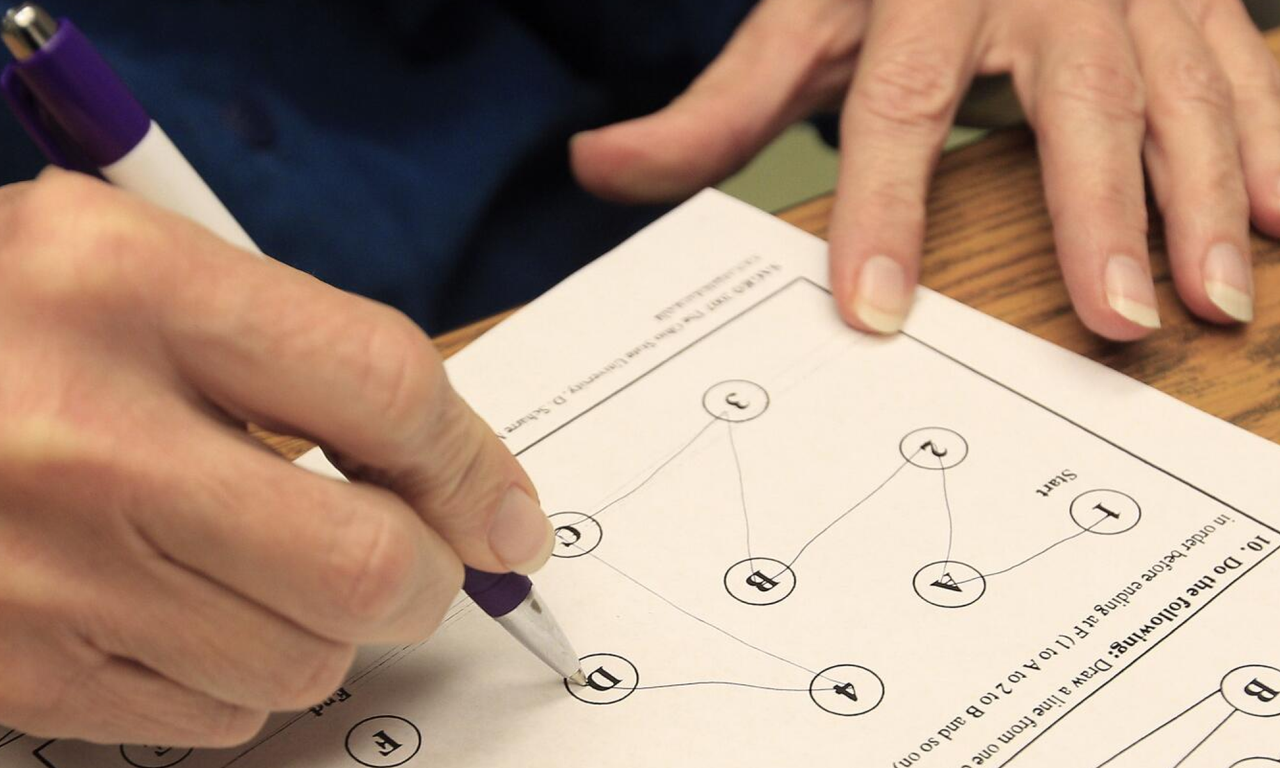
- Standardized Cognitive Tests - these structured assessments are designed to evaluate specific mental functions, such as memory, attention, language, reasoning, processing speed, and problem-solving. Tests like the Montreal Cognitive Assessment and Mini Mental State Exam can also reflect the functioning of specific domains using certain tasks. For example, the trail making task can asses planning and processing speed.
- Digital Assessments - there are online assessments such as those of the Cognifit platform that contain task-based assessments in order to evaluate cognitive function.
- Electroencephalography (EEG) Based Assessment Tools - EEG-based assessment tools may incorporate quantitative EEG to assess brainwave activity and its correlation to specific neurocognitive domains. Event-related potentials are brain responses that are directly linked in time to a specific sensory, cognitive, or motor event, depending on the waveform being assessed.
Mental Acuity and Aging

It’s a common trope that people say “my brain is not what it used to be,” but what causes that? A few explanations may include:
- Mitochondrial Dysfunction - It is well known that mitochondrial function decreases with age, which can lead to deficits in adenosine triphosphate (ATP) production, the “batteries” of the mitochondria (Somasundaram et al., 2024). Mitochondrial dysfunction is highly linked to cognitive impairment, affecting domains such as memory, decision-making and attention (Klein et al., 2021).
- White Matter Degradation - With aging also comes the degradation of white matter integrity, slowing communication between brain regions and contributing to reduced cognitive efficiency (Bennett & Madden, 2014).
- Reduced Neuroplasticity - As cells age, there is reduced neuroplasticity causing a decline in the brain’s capacity to form and strengthen neural connections diminishes (Burke & Barnes, 2006).
- Sleep Changes - Sleep is integral to removing toxins from the brain that can accumulate and cause cognitive dysfunction (Khan & Al-Jahdali, 2023). Altered sleep architecture as a result of aging affects memory consolidation and attentional control (Mander et al., 2017).
5 Ways to Improve Your Mental Acuity

If you are looking to enhance your mental acuity, there are several evidence-based ways to do so:
- Monitoring your diet - Diets such as the Mediterranean or MIND diet improve blood vessel function, enhancing cerebral blood flow and delivering more oxygen and nutrients to brain tissue (Morris et al., 2015).
- Supplements - Compounds like citicoline (CDP-choline) and phosphatidylserine contribute to the structural integrity of brain cells and may enhance memory performance and learning capacity (Kennedy & Wightman, 2011).
- Exercise - physical activity has many proven benefits to help with mental acuity, including boosting cerebral blood flow, stimulating neuroplasticity, and enhancing brain energy metabolism (Tarumi & Zhang, 2018; Voss et al., 2013; Mattson, 2012).
- Neurofeedback - Neurofeedback can improve mental acuity by training the brain to regulate its own activity patterns, with many studies showing its success with improving attention, working memory and processing speed (Gruzelier, 2014).
- Photobiomodulation - Photobiomodulation is used by top athletes and business leaders alike to promote cellular energy to fuel various cognitive processes (Hamblin, 2017).
Learn More About Mental Acuity & tPBM
References:
Baddeley, A. (2012). Working memory: Theories, models, and controversies. Annual Review of Psychology, 63, 1–29. https://doi.org/10.1146/annurev-psych-120710-100422
Bennett, I. J., & Madden, D. J. (2014). Disconnected aging: Cerebral white matter integrity and age-related differences in cognition. Neuroscience, 276, 187–205. https://doi.org/10.1016/j.neuroscience.2013.11.026
Bressler, S. L., & Menon, V. (2010). Large-scale brain networks in cognition: Emerging methods and principles. Trends in Cognitive Sciences, 14(6), 277–290. https://doi.org/10.1016/j.tics.2010.04.004
Burke, S. N., & Barnes, C. A. (2006). Neural plasticity in the ageing brain. Nature Reviews Neuroscience, 7(1), 30–40. https://doi.org/10.1038/nrn1809
Chun, M. M., Golomb, J. D., & Turk-Browne, N. B. (2011). A taxonomy of external and internal attention. Annual Review of Psychology, 62, 73–101. https://doi.org/10.1146/annurev.psych.093008.100427
Cowan, N. (2017). The many faces of working memory and short-term storage. Psychonomic Bulletin & Review, 24(4), 1158–1170. https://doi.org/10.3758/s13423-016-1191-6
Cunnane, S. C., Nugent, S., Roy, M., Courchesne-Loyer, A., Croteau, E., Tremblay, S., Castellano, C. A., & Fulop, T. (2011). Brain fuel metabolism, aging, and Alzheimer’s disease. Nutrition, 27(3–4), 3–20. https://doi.org/10.1016/j.nut.2010.07.021
Klein, I.-L., van de Loo, K. F. E., Smeitink, J. A. M., Janssen, M. C. H., Kessels, R. P. C., van Karnebeek, C. D., van der Veer, E., Custers, J. A. E., & Verhaak, C. M. (2021). Cognitive functioning and mental health in mitochondrial disease: A systematic scoping review. Neuroscience & Biobehavioral Reviews, 125, 57–77. https://doi.org/10.1016/j.neubiorev.2021.02.004
Gruzelier, J. H. (2014). EEG-neurofeedback for optimising performance. I: A review of cognitive and affective outcome in healthy participants. Neuroscience & Biobehavioral Reviews, 44, 124–141. https://doi.org/10.1016/j.neubiorev.2013.09.015
Hamblin, M. R. (2016). Shining light on the head: Photobiomodulation for brain disorders. BBA Clinical, 6, 113–124. https://doi.org/10.1016/j.bbacli.2016.09.002
Hamblin, M. R. (2017). Mechanisms and applications of the anti-inflammatory effects of photobiomodulation. AIMS Biophysics, 4(3), 337–361. https://doi.org/10.3934/biophy.2017.3.337
Hertzog, C., Kramer, A. F., Wilson, R. S., & Lindenberger, U. (2009). Enrichment effects on adult cognitive development: Can the functional capacity of older adults be preserved and enhanced? Psychological Science in the Public Interest, 9(1), 1–65. https://doi.org/10.1111/j.1539-6053.2009.01034.x
Heitz, R. P., Schall, J. D., & Woodman, G. F. (2010). Neural mechanisms of speed–accuracy tradeoff. Neuron, 65(3), 406–417. https://doi.org/10.1016/j.neuron.2010.01.034
Heneka, M. T., Carson, M. J., El Khoury, J., Landreth, G. E., Brosseron, F., Feinstein, D. L., Jacobs, A. H., Wyss-Coray, T., Vitorica, J., Ransohoff, R. M., Herrup, K., Frautschy, S. A., Finsen, B., Brown, G. C., Verkhratsky, A., Yamanaka, K., Koistinaho, J., Latz, E., Halle, A., … Kummer, M. P. (2015). Neuroinflammation in Alzheimer’s disease. The Lancet Neurology, 14(4), 388–405. https://doi.org/10.1016/S1474-4422(15)70016-5
Iadecola, C. (2017). The neurovascular unit coming of age: A journey through neurovascular coupling in health and disease. Neuron, 96(1), 17–42. https://doi.org/10.1016/j.neuron.2017.07.030
Kahneman, D., & Klein, G. (2009). Conditions for intuitive expertise: A failure to disagree. American Psychologist, 64(6), 515–526. https://doi.org/10.1037/a0016755
Kennedy, D. O., & Wightman, E. L. (2011). Herbal extracts and phytochemicals: Plant secondary metabolites and the enhancement of human brain function. Advances in Nutrition, 2(1), 32–50. https://doi.org/10.3945/an.110.000117
Khan, M. A., & Al‑Jahdali, H. (2023). The consequences of sleep deprivation on cognitive performance. Neurosciences (Riyadh), 28(2), 91–99. https://doi.org/10.17712/nsj.2023.2.20220108
Lezak, M. D., Howieson, D. B., Bigler, E. D., & Tranel, D. (2012). Neuropsychological assessment (5th ed.). Oxford University Press.
Mander, B. A., Winer, J. R., & Walker, M. P. (2017). Sleep and human aging. Neuron, 94(1), 19–36. https://doi.org/10.1016/j.neuron.2017.02.004
Mattson, M. P. (2012). Energy intake, meal frequency, and health: A neurobiological perspective. Annual Review of Nutrition, 25, 237–260. https://doi.org/10.1146/annurev.nutr.25.050304.092526
Morris, M. C., Tangney, C. C., Wang, Y., Sacks, F. M., Barnes, L. L., Bennett, D. A., & Aggarwal, N. T. (2015). MIND diet associated with reduced incidence of Alzheimer’s disease. Alzheimer’s & Dementia, 11(9), 1007–1014. https://doi.org/10.1016/j.jalz.2014.11.009
Posner, M. I., & Rothbart, M. K. (2007). Research on attention networks as a model for the integration of psychological science. Annual Review of Psychology, 58, 1–23. https://doi.org/10.1146/annurev.psych.58.110405.085516
Salthouse, T. A. (2010). Selective review of cognitive aging. Journal of the International Neuropsychological Society, 16(5), 754–760. https://doi.org/10.1017/S1355617710000706
Squire, L. R., & Dede, A. J. O. (2015). Conscious and unconscious memory systems. Cold Spring Harbor Perspectives in Biology, 7(3), a021667. https://doi.org/10.1101/cshperspect.a021667
Somasundaram, I., Jain, S. M., Blot-Chabaud, M., Pathak, S., Banerjee, A., Rawat, S., Sharma, N. R., & Duttaroy, A. K. (2024). Mitochondrial dysfunction and its association with age-related disorders. Frontiers in Physiology, 15, Article 1384966. https://doi.org/10.3389/fphys.2024.1384966
Tarumi, T., & Zhang, R. (2018). Cerebral hemodynamics of the aging brain: Risk of Alzheimer disease and benefit of aerobic exercise. Frontiers in Physiology, 9, 146. https://doi.org/10.3389/fphys.2018.00146
Tulving, E. (2002). Episodic memory: From mind to brain. Annual Review of Psychology, 53, 1–25. https://doi.org/10.1146/annurev.psych.53.100901.135114
Voss, M. W., Vivar, C., Kramer, A. F., & van Praag, H. (2013). Bridging animal and human models of exercise-induced brain plasticity. Trends in Cognitive Sciences, 17(10), 525–544. https://doi.org/10.1016/j.tics.2013.08.001
Get Your Custom PBM Integration Strategy – Built for Clinicians and Other Professionals
In 15 minutes, you’ll walk away with a clear plan to implement PBM safely, compliantly, and without disrupting client care.
Or Give us a Call: +1 (209) 268-7839