Published Studies
Attention & Memory
This 2025 pilot, randomized, double-blind study by Dr. Michael Lundie and colleagues investigated whether transcranial photobiomodulation via the Neuradiant 1070 could enhance cognitive performance and neurophysiological markers compared to a sham condition in healthy adults. Participants who received active tPBM demonstrated significantly faster reaction times (greater and sustained pupil dilation), improved working memory under high cognitive load, and increased physiological markers of attentional engagement relative to sham. Additional findings included greater pupil dilation during task performance - suggestive of enhanced neuromodulatory activity - and reductions in self-reported stress and mood symptoms in a majority of tPBM participants. Collectively, these results indicate that tPBM may acutely improve processing speed, attention, and cognitive efficiency, supporting its potential as a non-invasive tool for cognitive augmentation.
Methods
Design & Participants:
A randomized, double-blind study involving eight adults (18–45 years), randomly assigned to either the tPBM group (n = 4) or a sham group (n = 4). Each participant completed two sessions, spaced approximately six days apart.
Intervention
tPBM group: received near-infrared light (1070 nm) over the dorsolateral prefrontal cortex (DLPFC) for 15 minutes per session. Sham group: wore the same device but received only a brief initial light cue without sustained stimulation.
Assesments
Cognitive battery including reaction time tasks (e.g., psychomotor vigilance), working memory measures, pupillometry, and Depression Anxiety Stress Scale (DASS-21).
Results
Processing Speed:
The tPBM group showed significantly faster reaction times compared to sham (plasticity and RT measures significant at p = .013 and p = .038).
Working Memory:
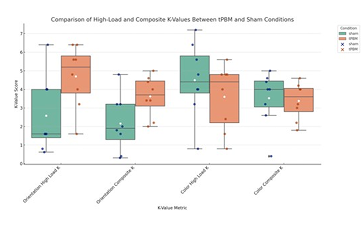
In high-load orientation trials, tPBM participants had significantly higher working memory capacity (K-values) than the sham group, suggesting better performance under cognitive load.
Pupillometry & Attention:
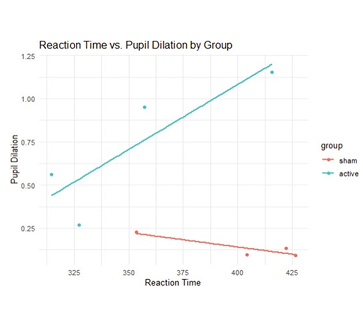
Participants receiving tPBM exhibited increased pupil dilation and greater consistency during tasks - physiological markers of heightened attentional engagement and potential involvement of neuromodulatory pathways (e.g., locus coeruleus-norepinephrine).
Psychological Metrics:
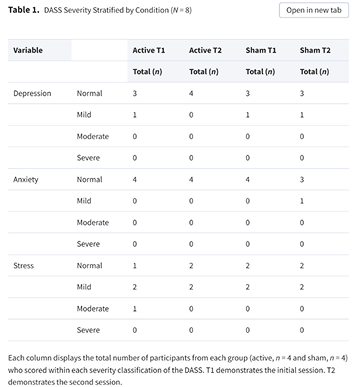
A majority of tPBM participants showed reductions in depression, anxiety, and stress scores, whereas sham controls did not show consistent improvements