Published Studies
COVID-19 Brain Fog
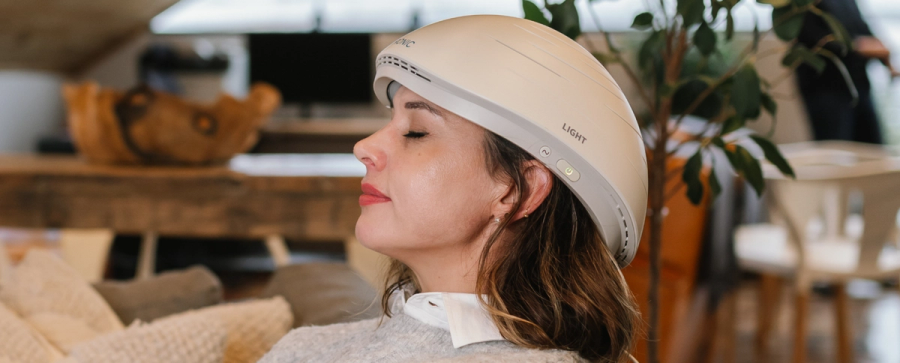
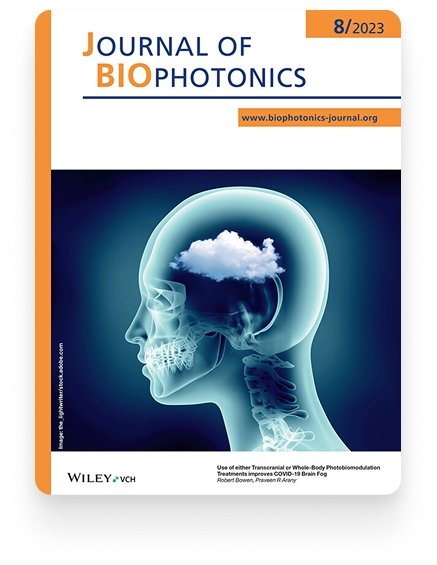
In a study by Bowen and Arany (2023), 12 sessions of 14 minutes of using the Neuradiant 1070 resulted in an improvement in cognitive tests including working memory, executive function, mental flexibility and reaction time. These findings were similar to the findings using a full body PBM bed, suggesting that reduction in Long COVID symptoms can be generated with a more affordable and portable tPBM device.
Methods
Participants & Duration:
Two groups of seven individuals with Long COVID symptoms, including brain fog, underwent a four-week treatment consisting of 12 sessions per participant.
Interventions
Transcranial PBM (tPBM): 1070 nm LED helmet (Neuradiant 1070). Whole-Body PBM (wbPBM): NovoTHOR light bed emitting 660 nm and 850 nm wavelengths.
Assessments (pre- and post-12 sessions):
- Montreal Cognitive Assessment (MoCA)
- Digit Symbol Substitution Test (DSST)
- Trail Making Tests A & B
- Physical Reaction Time (PRT)
- Quantitative EEG (WAVi system)
Results
Cognitive Improvements:
Both PBM modalities were associated with statistically significant improvements on cognitive tests (p < 0.05).
EEG Changes:
Quantitative EEG (WAVi) measurements showed changes that supported the observed cognitive benefits.
Similar Efficacy for Both Methods:
Improvements were seen whether PBM was delivered transcranially or via whole-body light, suggesting various PBM delivery methods may benefit Long COVID brain fog.
Pre-Post PBM Usage Tests
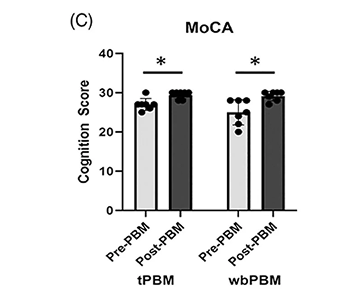
Graph C shows the pre and post light therapy protocols. In both groups we see an increase in the MoCA score, with a higher score meaning less impaired cognitive function.
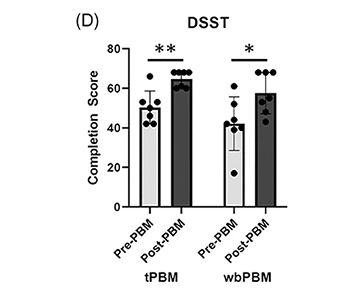
We can see in the Ddigit symbol substitution test (DSST) there is also an improvement from the baseline test to after the light therapy was applied.
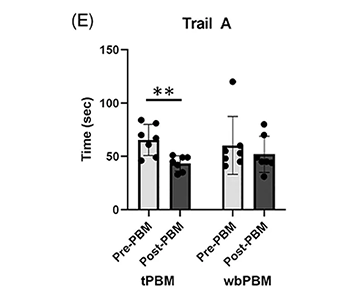
This graph shares a clear indication that after patients received tPBM in particular there was a reduction in time it took to complete the task, showing clear cognitive processing improvements.