What Is Blue Light Therapy Good For?
![[object Object]](https://cdn.sanity.io/images/h29o7kl4/staging/0c0476690b5e49f9a375deb663c4d52aa39fa8e2-352x351.heif?w=352&q=80&auto=format&fit=max)
What Is Blue Light Therapy Good For? Benefits, Uses And What Most People Get Wrong
Blue light is often talked about in a negative way (especially around sleep), but that’s only part of the story.
Blue light works very differently from other forms of light therapy, and understanding that difference is key.
So what does blue light actually do, and when is it helpful?
Let’s break it down.
Where it Started: Bilirubin and Light
Blue light therapy has its roots in neonatal care, where it’s still widely used today.
Doctors noticed that exposing newborns to light helped reduce the yellowing of their skin caused by jaundice. Over time, research confirmed that blue light helps the body process and remove excess bilirubin more easily (Cremer, Perryman & Richards, 1958).
This led to the development of phototherapy - a simple, non-invasive treatment that’s now standard in hospitals around the world.
Interestingly, while blue light began as a trusted medical tool, its reputation has shifted. With increased screen use and nighttime exposure, it’s now more commonly associated with sleep disruption.
But that’s only part of the picture.
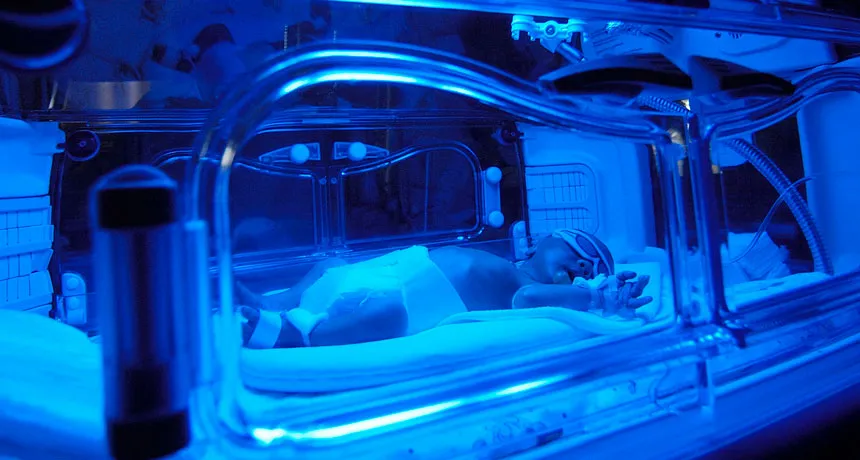
A baby under blue-green light in the hospital (Image Source: ScienceNews).
What Does Blue Light Therapy Do?
Blue light sits in the shorter wavelength range of the visible spectrum (around 400-500 nm), and it behaves very differently from red or near-infrared light.
Instead of penetrating deep into the body, it works mostly at the surface level - especially on the skin and through the eyes.
In practical terms, blue light is used to:
- Target certain types of bacteria on the skin
- Support dermatological treatments (like acne care)
- Help regulate your sleep-wake cycle through light exposure to the eyes
Unlike photobiomodulation (which uses red and near-infrared light), blue light isn’t focused on energy production in cells. Its effects are more surface-level and regulatory, particularly when it comes to skin and sleep-wake cycles, with some studies also supporting its effects in seasonal affective disorder.
You can think of it less as “repair” and more as signal and control - especially when it comes to skin and circadian rhythm.
What Does Blue Light Therapy Do for Your Face and Skin?
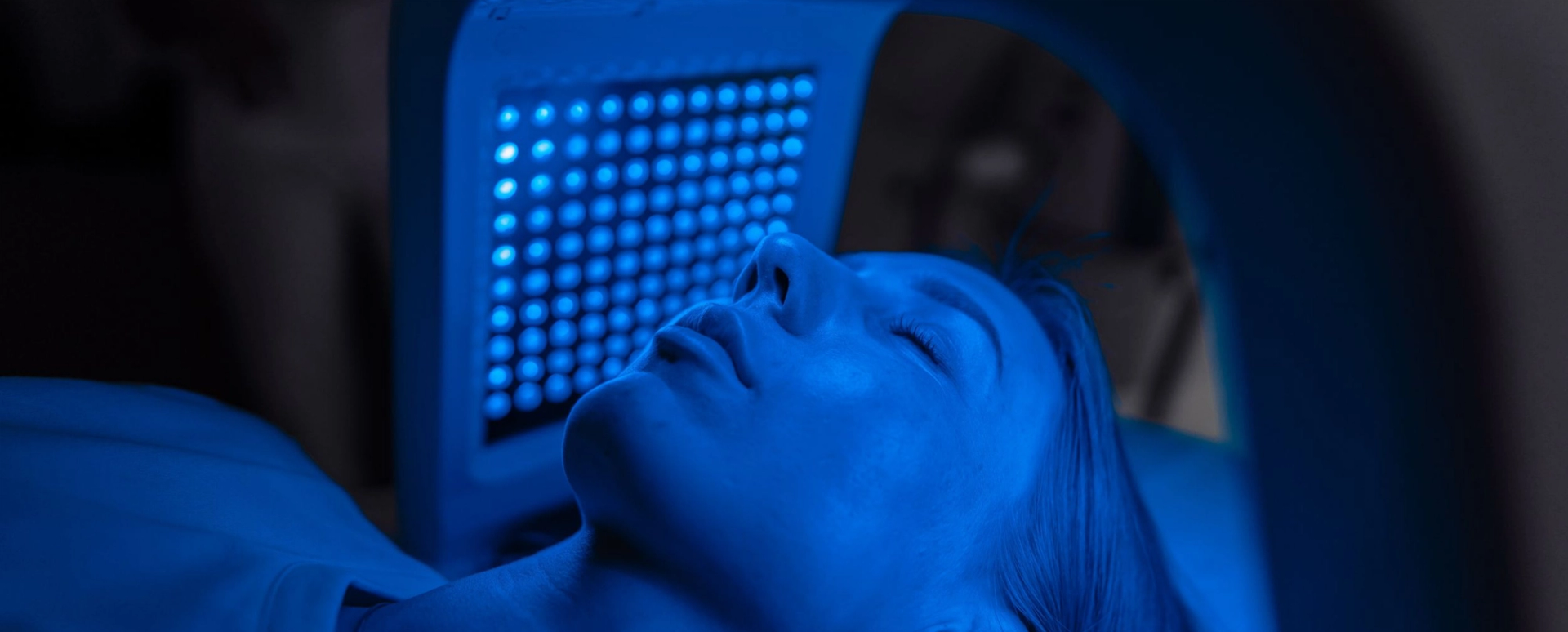
When people talk about blue light therapy, they’re usually referring to its use in skincare, especially for acne.
Blue light is best known for its antibacterial effects.
It can help target Cutibacterium acnes, the bacteria linked to acne (Cotter et al., 2023). When blue light interacts with these bacteria, it creates a localized effect that helps reduce their presence on the skin.
Because of this, blue light therapy is often used for:
- Mild to moderate acne
- Improving overall skin clarity
- Supporting oil balance (indirectly)
That said, blue light doesn’t go very deep into the skin.
So while it’s helpful for surface-level concerns like acne, it’s not typically used for deeper skin repair or anti-aging - this is where red and near-infrared light are more commonly used.
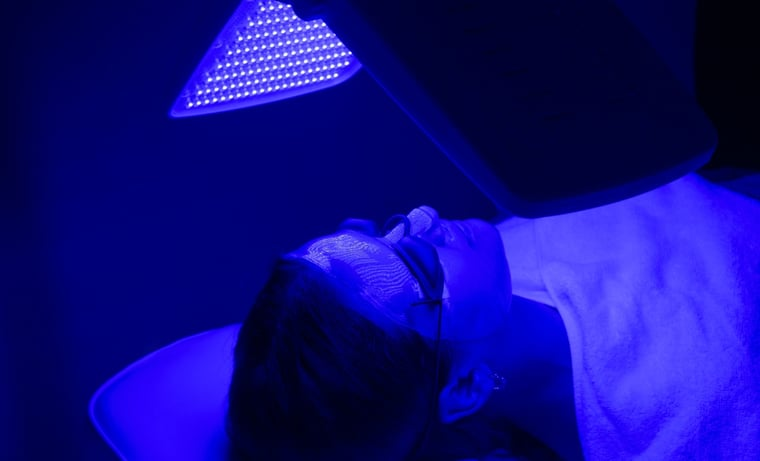
Blue light therapy for the skin (Image Source: Forefront Dermatology).
How Blue Light Effects Sleep
This is where blue light becomes more personal and where most of the confusion comes from. Blue light plays a powerful role in regulating your internal clock, also known as your circadian rhythm.
When light enters your eyes, it signals to your brain that it’s daytime. This helps keep you alert, focused, and awake. Specialized cells in the retina respond to blue wavelengths and communicate with your body’s internal clock, suppressing the release of melatonin - the hormone that helps you fall asleep (Cajochen et al., 2011).
During the day, this is exactly what you want. But at night, it’s a different story.
Evening exposure - especially from screens or artificial lighting - can delay melatonin release and shift your natural sleep cycle. This can make it harder to fall asleep, reduce sleep quality, and leave you feeling less rested the next day.
So it’s not that blue light is inherently bad - it’s really about timing.
Helpful during the day. Potentially disruptive at night.
What Are the Benefits of Blue Light Glasses?
Blue light glasses are designed to reduce exposure to blue wavelengths, especially from screens.
Their main purpose is to support your natural sleep rhythm, particularly in the evening.
As we just covered, blue light at night can signal to your brain that it’s still daytime, which may delay melatonin release. Blue light glasses help reduce that signal, making it easier for your body to wind down.
They may also:
- Support more natural sleep timing
- Reduce eye strain during long periods of screen use
- Help make evenings feel less stimulating
You may benefit from wearing blue light glasses:
- 1-3 hours before bed (especially if you’re using screens)
- During late-night work or studying
- When exposed to bright indoor lighting in the evening
- If you notice difficulty falling asleep after screen use
Again, the key idea here isn’t to avoid blue light completely, it’s to manage when you’re exposed to it.
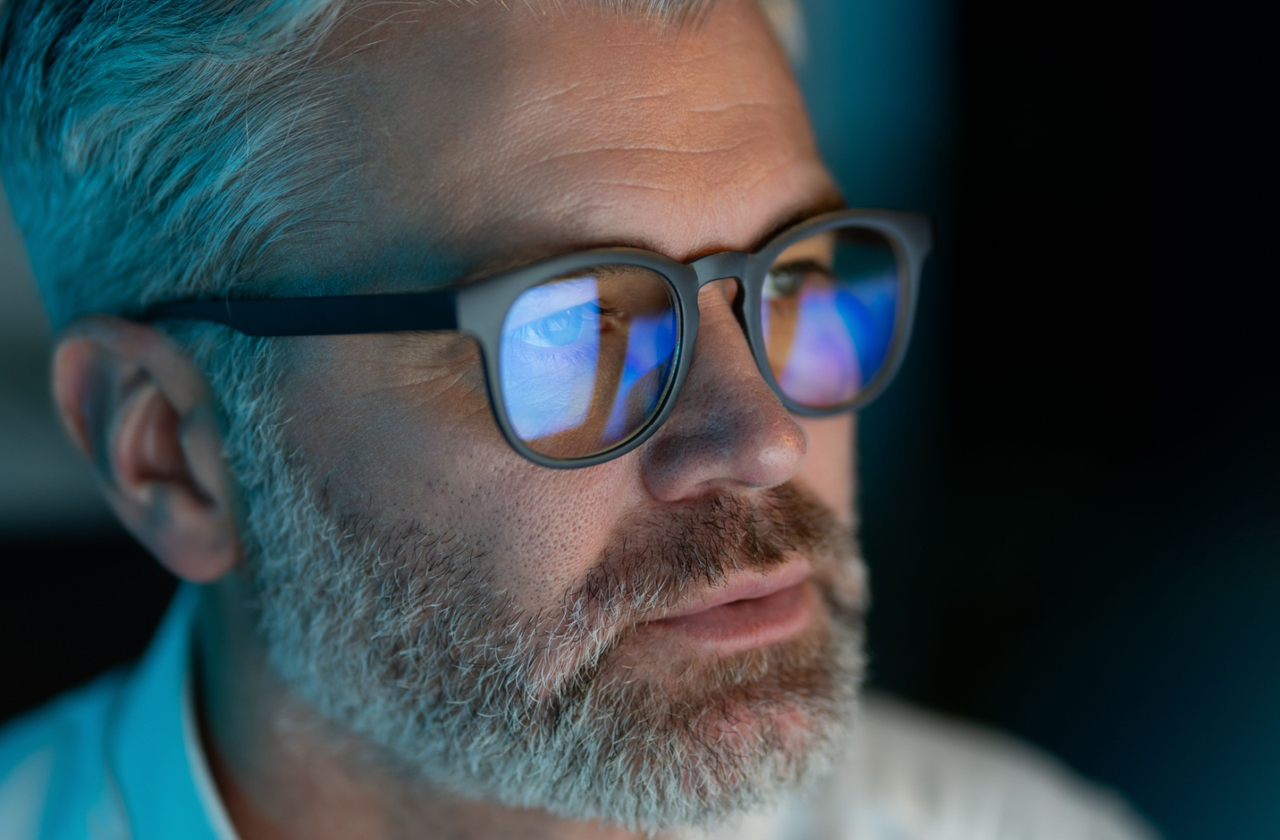
Blue light blocking glasses (Image Source: Stonebridge Eyecare).
Blue Light vs Red Light Therapy
Not all light therapy works the same way, and this is where most confusion comes from.The purpose of light therapy will depend widely on the wavelength of light being used. It’s worth comparing how blue light compares to red light therapy, whose devices are dominating the health and wellness space. Blue light and red light therapy differ significantly in both mechanism and application.
Blue light:
- Wavelength: ~400-500 nm
- Penetration: Very shallow (skin surface)
- Primary use: Acne support, antibacterial effects
- Additional effects: Influences circadian rhythm via the eyes
Red light:
- Wavelength: ~600–700 nm
- Penetration: Deeper (skin and underlying tissue)
- Primary use: Skin health, recovery, and cellular support
- Mechanism: Supports mitochondrial function and cellular signaling
In many skincare settings, the two are sometimes combined, blue light to address surface-level bacteria, and red light to support skin recovery and overall skin quality.
References:
Cajochen, C., Frey, S., Anders, D., Späti, J., Bues, M., Pross, A., Mager, R., Wirz-Justice, A., & Stefani, O. (2011). Evening exposure to a light-emitting diodes (LED)-backlit computer screen affects circadian physiology and cognitive performance. Journal of Applied Physiology, 110(5), 1432–1438. https://doi.org/10.1152/japplphysiol.01413.2009
Cotter, E. J., Cotter, L. M., Riley, C. N., Dixon, J., VanDerwerker, N., Ufot, A. I., Godfrey, J., Gold, D., Hetzel, S. J., Safdar, N., & Grogan, B. F. (2024). Antimicrobial effects of blue light therapy against Cutibacterium acnes: Optimal dosing and impact of serial treatments. JSES International, 8(3), 328–334. https://doi.org/10.1016/j.jseint.2023.11.020
Cremer, R. J., Perryman, P. W., & Richards, D. H. (1958). Influence of light on the hyperbilirubinaemia of infants. The Lancet, 271(7030), 1094–1097. https://doi.org/10.1016/S0140-6736(58)91849-X

Subscribe for insights, tips, offers & more.
By signing up, you accept our privacy policy. Your personal data will be processed so that we can contact you about our products. Read our Privacy Policy for more information.