Can Light Therapy Help with Memory? What Our Study Revealed
![[object Object]](https://cdn.sanity.io/images/h29o7kl4/staging/0c0476690b5e49f9a375deb663c4d52aa39fa8e2-352x351.heif?w=352&q=80&auto=format&fit=max)
Dementia has garnered significant attention over the last 20 years due to its spike in diagnoses in our aging population. Yet what is often overlooked is a condition known as mild cognitive impairment (MCI), the stage between normal aging and dementia (Mayo Clinic, 2024).
Researchers are actively investigating innovative approaches to address MCI and early-onset Alzheimer’s disease, with photobiomodulation (PBM), commonly known as light therapy, emerging as a leading tool for symptom management. Neuronic’s research team decided to examine the use of PBM for MCI and early onset Alzheimer’s disease, and explore if there was a difference in the effectiveness of small modifications in wavelength, comparing 1040 nm to 1070 nm. While the results are still in an interim analysis stage, we are excited to share what we have found so far.
An Overview of Our Study
Recruitment:
Our recruitment process began through the neuronic.online website, where all our ongoing research studies are listed. Many participants were also referred by their neurologists, who believed they would be excellent candidates for the study.
After visiting our website, interested individuals could click on the Research tab to access a short screening form. This form helped determine whether they met the initial eligibility criteria. Those who passed the initial screening were then contacted by our Research Recruiter to review their survey results in more detail.
Following this discussion, eligible participants were asked to provide proof of a medical diagnosis - specifically, documentation from their neurologist or primary physician confirming a diagnosis of Mild Cognitive Impairment (MCI) or Alzheimer’s disease.
Inclusion criteria:
Eligible participants were individuals aged 50 to 80 years residing in the United States who had been clinically diagnosed with mild cognitive impairment (MCI) or early-stage dementia due to Alzheimer’s disease by a neurologist. All participants were required to have access to both a computer and a smartphone with an active internet connection. A caregiver, spouse, or family member was also required to be available to assist the participant in adhering to the study protocol.
As part of the screening process, participants completed a virtual Montreal Cognitive Assessment (MoCA) administered by a certified Neuronic staff member who had received the appropriate training and accreditation to conduct the assessment. Additionally, participants were required to be able and willing to travel up to 20 miles to complete two EEG assessments—one at the beginning and another at the end of the study.
MoCA Test Cut-off scores were as follows:
- MCI: 23/30
- Early Alzheimer’s Disease: 19/30
Measures:
Participants engaged in check-ins with a research assistant every 2-4 weeks throughout the 3 month stretch of this study, where updates on progress were provided and any questions were answered. Throughout the study, participants engaged in various metrics:
- Pre and post QEEG - completed at baseline and after 3 months
- Pre, midpoint and post CogniFit tests - CogniFit is a digital platform used in both research and clinical settings to measure and strengthen cognitive abilities. It assesses 22 different skills, from processing speed to spatial reasoning, and provides an easy-to-read report showing a person’s cognitive strengths and challenges. Participants took this test at baseline, roughly 1.5 months in (midpoint), and at 3 months (post).
- Insomnia severity index - participants filled out this questionnaire at baseline, roughly 1.5 months in (midpoint), and at 3 months (post).
- Personal Metrics - personal metrics assessing ability to remember recent events, recalling names and important dates, and recognizing familiar places were recorded at every check-in session.
* In the course of this study, participants did not experience any serious adverse reactions.
Goal:
The goal of this study was to see if consistent PBM use could improve symptoms associated with mild cognitive impairment and early Alzheimer’s disease, and if there was a difference between the 1040 nm and 1070 nm conditions.
What We Found
While the qEEG data is still being analyzed, here are some interim results from other measures:
CogniFit Results
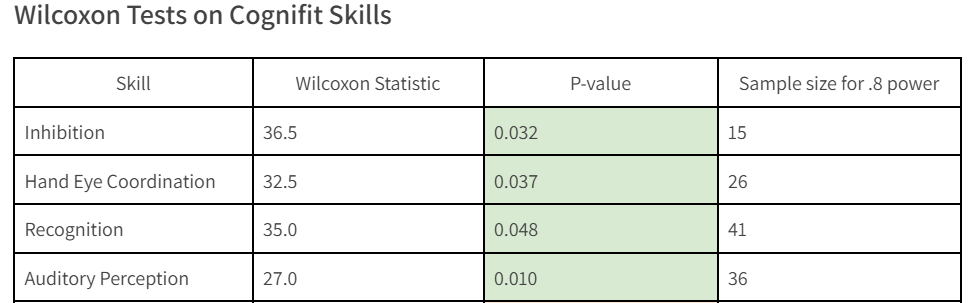
Statistically significant gains were observed in inhibition, hand-eye coordination, recognition, and auditory perception, suggesting these domains were particularly responsive to the intervention in this sample.
Insomnia Severity Index (ISI)
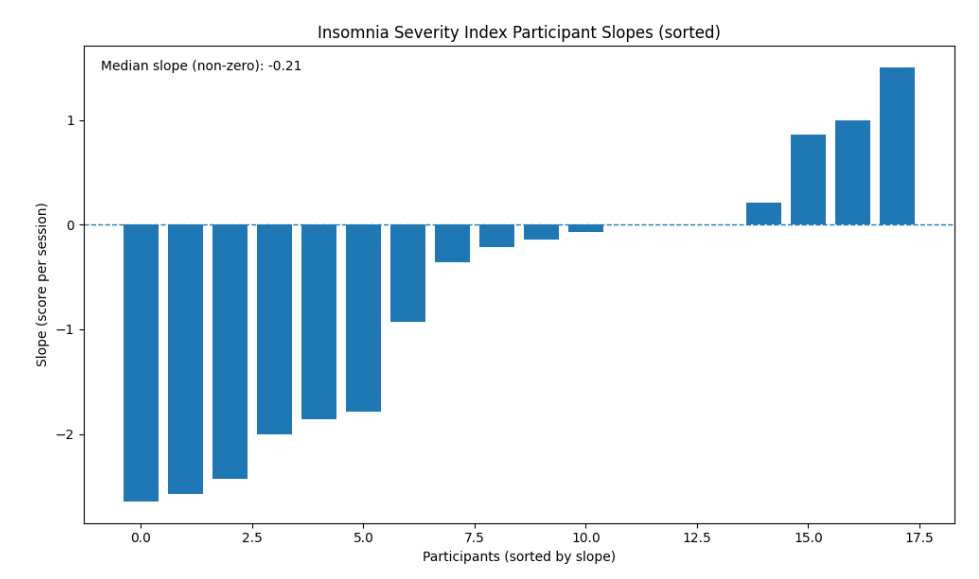
Across the study period, participants showed a steady improvement in sleep quality. Statistical analysis revealed a significant decrease in reported sleep issues over time (p = 0.045), meaning that, on average, individuals experienced fewer sleep-related difficulties as the sessions progressed. The ISI questions rated troubles falling asleep, staying asleep, and how these hindrances impacted daily functioning.
Personal Metrics
Three subjective metrics were gathered across the course of the study:
- How would you rate your ability to remember recent events?
- How often do you have trouble recalling names or important dates?
- Can you recognize familiar places?
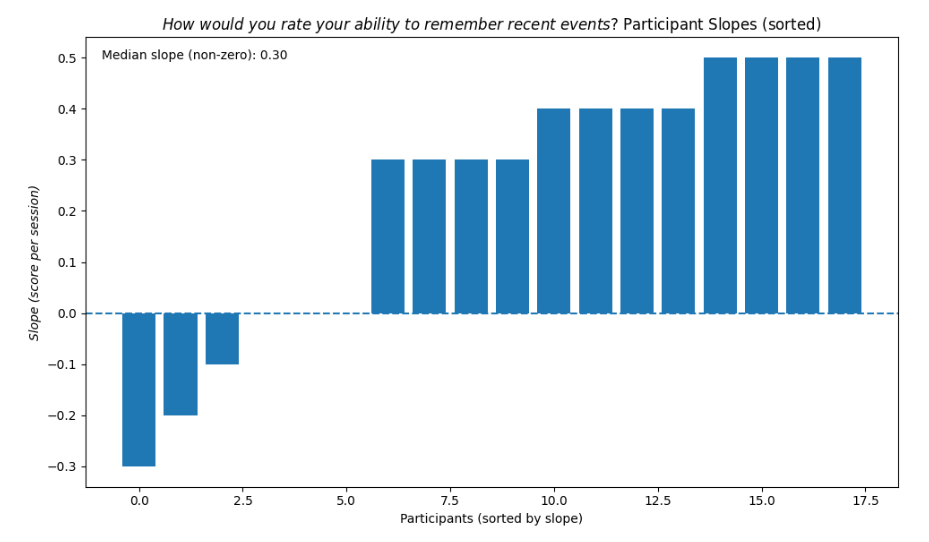
Metric 1. Participants reported noticeable improvements in their ability to remember recent events over the course of sessions. Statistical analysis confirmed this positive trend (p = .003), possibly suggesting that regular engagement with tPBM was linked to meaningful gains in memory and recall over time.
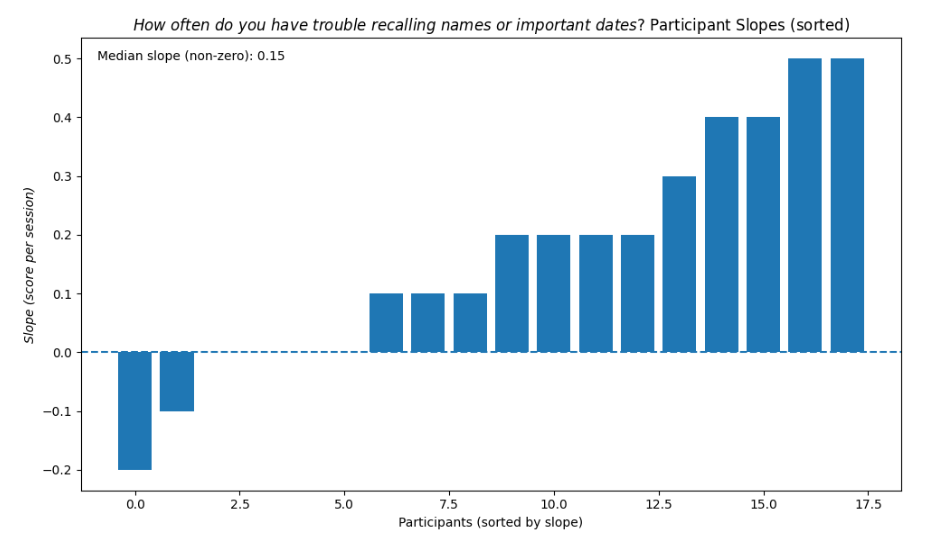
Metric 2. Participants also showed significant improvements in remembering names and important dates throughout the study sessions. This upward trend (p = .007) suggests that tPBM was consistently associated with better recall of meaningful personal information over time.
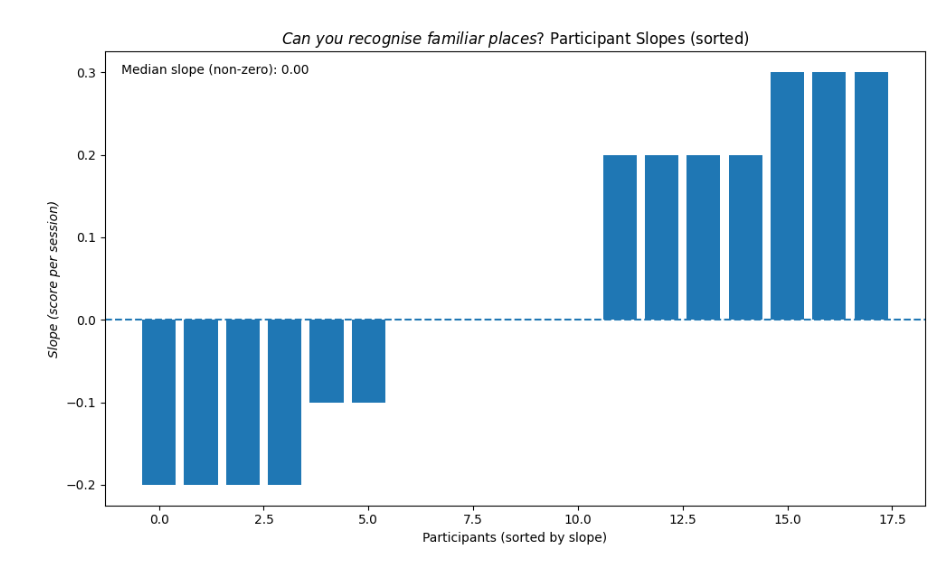
Metric 3. Participants’ ability to recognize familiar places remained stable throughout the light therapy sessions. While there was no significant change in this area (p = .25), results showed no decline either, suggesting that tPBM had a neutral effect on spatial recognition abilities.
What it Means & Why it Matters
Although only an interim analysis, this study provides promising findings already on the impact that tPBM may have on MCI and early Alzheimer’s disease. Many improvements were found in this study, specifically in the domains of inhibition, hand-eye coordination, recognition, and auditory perception from CogniFit scores, as well as memory from weekly metrics. These findings add to a growing body of research showing that tPBM can support brain function in individuals with MCI and early Alzheimer’s disease. Studies on this topic have seen improvements in working memory, sustained attention, reduction in cell death, and a reduction of amyloid-beta aggregates (Papi et al., 2022; Nizamutdinov et al., 2021; Chazot & Duggett, 2014; Taboada et a., 2011).
Sleep is one of the first areas to become disrupted in MCI, and growing evidence shows that poor sleep can accelerate memory loss and neurodegeneration (Spira et al., 2015). The significant improvement in reported sleep quality seen in our participants aligns with this understanding, and may represent an important mechanism through which light therapy supports cognitive health.
While improvements in sleep and memory are promising, the stability observed in recognition of familiar places is also an encouraging outcome. In conditions like MCI and Alzheimer’s disease that often result in a decline over time, maintaining stable function can be just as valuable as improvement. These findings suggest that tPBM may help slow the trajectory of cognitive decline rather than allowing it to progress unchecked.
With over 55 million people worldwide affected by dementia, the need for innovative, accessible, and preventive approaches has never been greater. While more research is needed, our results add to the mounting evidence that light-based interventions could play a meaningful role in supporting cognitive function and quality of life in aging populations.
Key Takeaways
- Light therapy shows promise: Findings align with previous research suggesting that tPBM can benefit individuals with MCI and early Alzheimer’s disease.
- Growing global need: With millions of people affected by dementia worldwide, exploring new, accessible tools for cognitive support is increasingly important.
- Stable function is positive: In conditions like MCI, maintaining stable performance may indicate a slowing of cognitive decline.
- Sleep matters for cognition: Improvements in sleep quality may play a vital role in supporting memory and overall brain health.
- Non-invasive brain support: tPBM offers a gentle, low-risk approach that may help preserve brain function and quality of life.
References
De Taboada, L., Yu, J., El-Amouri, S., Gattoni-Celli, S., Richieri, S., McCarthy, T., Streeter, J., & Kindy, M. S. (2011). Transcranial laser therapy attenuates amyloid-β peptide neuropathology in amyloid-β protein precursor transgenic mice. Journal of Alzheimer’s Disease, 23(3), 521–535. https://doi.org/10.3233/JAD-2010-100894
Duggett, N. A., & Chazot, P. L. (2014). Low-Intensity Light Therapy (1068 nm) protects CAD neuroblastoma cells from β-amyloid-mediated cell death. Biology & Medicine, 1(3), 103.
Mayo Clinic Staff. (2024, October 24). Mild cognitive impairment (MCI): Symptoms & causes. Mayo Clinic. https://www.mayoclinic.org/diseases-conditions/mild-cognitive-impairment/symptoms-causes/syc-20354578
Nizamutdinov, D., Qi, X., Berman, M. H., Dougal, G., Dayawansa, S., Wu, E., Yi, S. S., Stevens, A. B., & Huang, J. H. (2021). Transcranial near infrared light stimulations improve cognition in patients with dementia. Aging and Disease, 12(4), 954-963. https://doi.org/10.14336/AD.2021.0229
Papi, S., Allahverdipour, H., Jahan, A., Dianat, I., Asghari Jafarabadi, M., & Moghadam Salimi, M. (2022). The effect of transcranial photobiomodulation on cognitive function and attentional performance of older women with mild cognitive impairment: A randomized controlled trial. Przegląd Menopauzalny, 21(3), 157-164. https://doi.org/10.5114/pm.2022.119794
Spira, A. P., Chen-Edinboro, L. P., Wu, M. N., & Yaffe, K. (2014). Impact of sleep on the risk of cognitive decline and dementia. Current Opinion in Psychiatry, 27(6), 478-483. https://doi.org/10.1097/YCO.0000000000000106

Subscribe for insights, tips, offers & more.
By signing up, you accept our privacy policy. Your personal data will be processed so that we can contact you about our products. Read our Privacy Policy for more information.